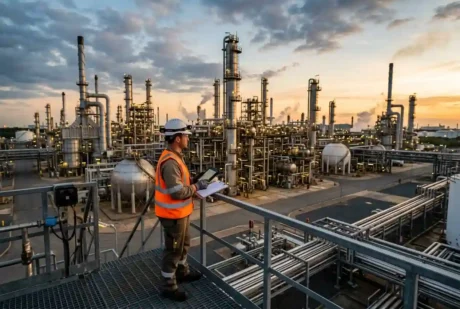
Fuel powers homes, cars, planes, and factories across the world. But before crude oil can be used, it must pass through an oil refinery to become petrol, diesel, or jet fuel. This course shows you how that process works in simple terms. It is made for beginners, students, and anyone curious about the energy sector. You will learn what happens inside a refinery and why it matters for daily life.
You will study how crude oil is split using heat and pressure. You will learn about cracking, reforming, and cleaning steps that shape the final product. You will cover safety, emissions, and UK rules for waste and energy use. Advanced units add digital tools, smart systems, and future trends like biofuels and hydrogen. By the end, you will understand how an oil refinery runs, feel more confident in technical talks, and be ready to explore roles in oil, gas, and energy industries.
This Oil Refinery Process gives you a clear view of how crude oil becomes usable fuel. You will learn what crude oil is, where it comes from, and how it enters an oil refinery. The course covers distillation, cracking, reforming, and cleaning steps. You will study product streams like petrol, diesel, and jet fuel, plus quality checks and blending. Safety units focus on emissions, waste, energy use, and UK HSE rules. Advanced units add digital tools, smart systems, and future trends such as biofuels and hydrogen refining. By the end, you can speak confidently about oil refinery work and explore entry roles in the energy sector.
Learn crude oil basics, composition, and global supply routes. Study oil refinery parts, distillation types, column design, and cost factors. Cover market forces, compliance costs, and the refinery role in energy.
Study cracking, hydrocracking, coking, and sulphur removal steps. Learn reforming, isomerisation, and advanced catalysts. Cover control systems, automation, and process improvements used in modern oil refinery sites today.
Explore petrol, diesel, jet fuel, lubricants, and petrochemicals. Study UK fuel rules, blending methods, and additive use. Learn lab testing, product checks, and quality standards for safe oil refinery output.
Cover emissions sources, reduction methods, and UK compliance. Study waste treatment, recycling, energy saving, and heat recovery. Learn hazards, risk control, and HSE rules for safe oil refinery operations.
Link refineries to petrochemical plants and study chemical outputs. Learn digital twins, AI upkeep, and smart controls. Explore biofuels, hydrogen refining, and low carbon trends shaping UK oil refinery work.
This Oil Refinery Process course does not require you to have any prior qualifications or experience. You can just enrol and start learning. This Oil Refinery Process course was made by professionals and it is compatible with all PC’s, Mac’s, tablets and smartphones. You will be able to access the course from anywhere at any time as long as you have a good enough internet connection.
After studying the course materials, there will be a written assignment test which you can take at the end of the course. After successfully passing the test you will be able to claim the PDF certificate for £9.99. Original Hard Copy certificates need to be ordered at an additional cost of £19.99.
| Section 01: Introduction to Oil Refining | |||
| Module 1: Introduction to Oil Refining | 00:15:00 | ||
| Section 02: Refining Technologies and Processes | |||
| Module 2: Refining Technologies and Processes | 00:15:00 | ||
| Section 03: Product Streams and Quality Control | |||
| Module 3: Product Streams and Quality Control | 00:12:00 | ||
| Section 04: Environmental Impact and Safety in Refining | |||
| Module 4: Environmental Impact and Safety in Refining | 00:14:00 | ||
| Section 05: Advanced Refinery Operations and Future Trends | |||
| Module 5: Advanced Refinery Operations and Future Trends | 00:16:00 | ||

$557.70 Original price was: $557.70.$26Current price is: $26. ex Vat
Level: Intermediate
Duration: 1 hour, 12 minutes
Students: 0