



Recently, several UK regions released updates showing a rise in respiratory illness, poor air quality, and pressure on local health services. Although such reports appear often, they always remind communities how quickly daily life can change when health risks grow. In one local area, for example, a council team received new data showing sharp differences in life expectancy between neighbourhoods. The room became tense as leaders realised how many issues were linked together. Yet the atmosphere shifted once a public health consultant walked them through the evidence. With calm, clear explanations, they connected the numbers, outlined realistic actions, and helped everyone understand the wider picture. Moments like this show why the role matters and why many people now want to understand how to become a public health consultant in the UK.
Table of Contents
What Does a Public Health Consultant Actually Do?
A public health consultant does not treat one patient at a time. Instead, they work at the population level. They ask questions like “Why is asthma worse in this ward?” or “Why are cancer outcomes poorer here?” Then they design and drive solutions.
Typically, a public health consultant will:
Analyse health data for whole communities.
Advise senior leaders on policies, funding, and priorities.
Lead programmes on prevention, screening, or health protection.
Coordinate responses to outbreaks or environmental risks.
Work with councillors, NHS leaders, charities, and community groups.
Moreover, the role is highly strategic. You might lead on climate and health, violence reduction, tobacco control, or vaccine uptake. You often manage teams, handle complex politics, and make tough choices with incomplete information.
Public health consultants work in many settings, including:
Local authorities and combined authorities.
NHS England and Integrated Care Boards.
UK Health Security Agency and other arms-length bodies.
Universities and research units.
Voluntary and international organisations.
Why Become a Public Health Consultant in the UK?
Firstly, the impact is huge. You influence policies that shape thousands of lives, sometimes millions. You help reduce health inequalities, prevent disease, and protect communities from major threats.
Secondly, demand is strong. The UK public health workforce is large, and the market is forecast to grow. Ageing populations, climate change, and new infectious diseases keep driving demand for skilled public health leaders.
Thirdly, the pay reflects the responsibility.
Typical salary ranges in the UK
As a public health consultant in the NHS, you will usually be on:
Role level | Typical salary range (approximate) | Source |
Public health specialty trainee | From around £49,909 | NHS Health Careers |
Consultant in public health (AfC 8d–9) | Roughly £83,000–£105,000+ | Recent NHS job adverts (jobs.nhs.uk) |
Medical consultant scale equivalent | Around £93,000+ baseline | NHS England advert |
Salaries vary between organisations and nations, yet they place you among higher UK earners. In addition, NHS roles come with strong pensions and generous leave. (findajob.dwp.gov.uk)
Finally, the work is intellectually demanding. It suits people who enjoy complex problems, big data, and long-term change.
Key Skills and Qualities
You do not need to be a genius. However, you do need a specific mix of skills. NHS Health Careers and the Public Health Skills and Knowledge Framework highlight several core attributes.
Essential skills and qualities include:
Analytical thinking
You must interpret statistics and research and still see the story behind them.Communication and influence
You explain risk, evidence, and options to non-experts, often under pressure.Political awareness
You understand how decisions are made and how to work with elected members.Leadership and negotiation
You lead multi-agency projects and negotiate with partners who disagree.Resilience and adaptability
You handle crises, setbacks, and public scrutiny while staying calm and credible.Ethical judgment
You balance fairness, cost, and evidence when resources are tight.
In addition, many public health consultants bring experience from medicine, nursing, social care, environmental health, data science, or policy roles.
Routes into Public Health Consultancy
There are two main routes in the UK. Fortunately, both medical and non-medical applicants can become public health consultants.
1. Medical route
If you are already a doctor or dentist, you can apply after foundation or equivalent training.
You will usually need:
GMC or GDC registration.
Foundation competencies or equivalent.
Evidence of interest in population health and research.
You then apply for national Public Health Specialty Training at ST1 level.
2. Non-medical route
If you are not a doctor, you can still become a public health consultant. Many do.
Generally, you will need:
A first degree at 2:1 or above, or a relevant Master’s or PhD.
Significant experience in a related field, such as epidemiology, environmental health, public policy, or global health.
You apply for the same Public Health Specialty Training scheme as medical applicants. Competition is tough. In 2024, over 1,500 people applied for about 105 places.
3. Portfolio routes and alternative paths
There is also a portfolio route to specialist registration for experienced professionals. The UK Public Health Register and Faculty of Public Health set the standards.
This route suits senior practitioners who already work at a high level and can evidence the full curriculum.
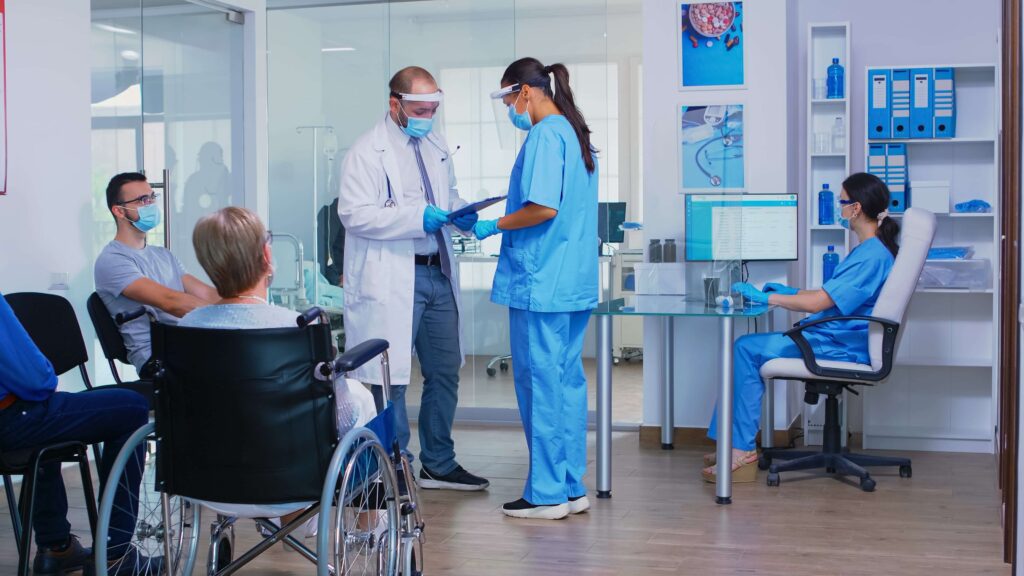
Step-by-Step: How to Bcome a Public Health Consultant
Now let’s walk through the process in practical steps.
Step 1: Explore public health and test your interest
Before you commit, you should understand what public health consultants really do.
Therefore, start by:
Reading trusted sources, such as NHS Health Careers and Prospects Public Health Careers.
Following UK public health bodies and local authority teams online.
Attending free webinars or local events when possible.
You should notice whether you enjoy thinking at system level rather than clinical level.
Step 2: Build a suitable academic base
Next, you need solid academic foundations.
For many, that means:
A relevant undergraduate degree, such as medicine, biomedical science, statistics, psychology, or social science.
Or a Master’s in public health, global health, epidemiology, or a related field.
A Master’s is highly valuable. In fact, most public health specialty trainees complete a full Master’s as part of training.
You can also start building foundations through focused online learning.
For example, Studyhub’s Public Health course introduces key concepts in a flexible way. It helps you understand health determinants, policy, and basic epidemiology.
If you want a broader risk and regulation angle, Studyhub’s Public Health and Safety course offers wider context around workplace and environmental safety.
Step 3: Gain real experience in public health settings
Admissions panels look for more than study. They want evidence that you can work in public health environments.
You could:
Work in local government public health teams.
Join health improvement or charity projects.
Take roles in data or intelligence units.
Support research projects in universities or NHS organisations.
Moreover, you should try to contribute to real outputs. For example, you might help with a needs assessment, evaluation report, briefing for councillors, or service review.
Step 4: Understand the Public Health Specialty Training scheme
Public Health Specialty Training is the main route to consultant level. The Faculty of Public Health oversees the curriculum and quality.
The programme usually lasts at least five years. It combines:
A Master’s degree in public health, if you do not already hold one.
Structured placements in local authorities, health protection, and healthcare public health.
Rotations through regional or national bodies.
Formal exams, including FPH membership examinations.
You can find detailed information on the Faculty of Public Health website, which explains entry standards and the current curriculum.
Step 5: Prepare a competitive application
Competition is fierce. Therefore, preparation matters.
You should:
Reflect on your motivation and values.
Gather strong evidence of leadership, teamwork, and communication.
Demonstrate experience using data and research to inform decisions.
Show that you understand public health ethics and health inequalities.
In addition, you must meet the formal person specification for that recruitment round. This covers academic qualifications, experience, and competencies.
Step 6: Succeed at selection tests and interview
Selection often involves situational judgement tests, written exercises, and interviews.
During these, assessors will look for:
Clear reasoning and structured thinking.
An understanding of how public health works in the UK.
Commitment to improving population health, not just personal career goals.
Ability to handle complex, politically sensitive scenarios.
You should practise explaining technical ideas, such as risk or uncertainty, in plain language.
Step 7: Complete specialty training and gain registration
Once accepted, you become a public health specialty registrar.
Over at least five years, you will:
Rotate through diverse placements.
Complete the assessed curriculum.
Pass FPH exams.
Build a portfolio of evidence that proves consultant-level competence.
At the end, you seek entry to the specialist register. This may be through the GMC, GDC, or UKPHR, depending on your background.
Step 8: Apply for public health consultant posts
After registration, you can apply for consultant roles across the UK.
Job adverts appear on:
NHS Jobs and local authority websites.
UK Government sites, such as Find a Job.
University recruitment pages and specialist boards.
You will now be judged as a senior leader. Therefore, you must show strategic thinking, system leadership, and clear public health impact.
What is Training and Working Life Really Like?
Public health specialty training is demanding yet flexible.
During training, you often:
Work regular office-based hours, with occasional out-of-hours on-call for health protection.
Join multidisciplinary teams on projects that can last months or years.
Move between organisations and locations to gain breadth.
Consultant roles themselves can be intense. However, they usually offer more predictable hours than many acute clinical posts.
You might:
Spend mornings in strategic meetings.
Use afternoons to review data, write reports, and plan programmes.
Respond to urgent issues, such as outbreaks, extreme weather events, or service failures.
Because the work is varied, you can shape your focus over time. You might lean more towards academic work, local authority policy, or national strategy.
How Studyhub Courses Can Support Your Journey
You do not need to wait for speciality training to start learning. In fact, early study helps you decide whether this path suits you.
The Public Health course from Studyhub gives a structured introduction. It covers key areas such as epidemiology, disease control, and measures of disease frequency. It also covers maternity and childbirth, environmental influences on health, health systems and policy, and the ethical issues that shape decision-making in modern practice. Therefore, it helps you speak the same language as public health teams.
The Public Health and Safety course adds another layer. It links public health thinking with workplace risk, regulation, and environmental safety. This combination strengthens your understanding of real-world hazards and control measures.
Although these courses are not replacements for a Master’s or specialty training, they:
Show clear commitment when you apply for jobs and placements.
Help you perform better in interviews and situational discussions.
Give you useful knowledge you can apply in current roles.
Is a Career as a Public Health Consultant Right for You?
Becoming a public health consultant in the UK is not quick. It demands years of study, competitive selection, and tough training. It also demands emotional resilience, political skill, and strong ethics. However, the rewards are real. You help shape healthier communities. Also, tackle unfair health gaps. You guide leaders through crises and conflicting pressures. Also, join a profession that values evidence, fairness, and long-term thinking. If you enjoy big questions, care about justice, and like working with data and people, then this path may fit you well. You can start today, at your own pace, by learning more and building your foundation.
FAQs
It usually takes 5 years of Public Health Specialty Training after meeting entry requirements. However, most applicants also have several years of prior experience or postgraduate study, so the full journey often takes 8–12 years in total.
In the UK, public health consultants typically earn £79,000–£109,000 on the Agenda for Change Bands 8d–9. Medical consultants appointed on the medical contract can start at around £93,600+, depending on location and experience.
You need to complete Public Health Specialty Training and gain specialist registration with the GMC, GDC, or UKPHR. Most applicants also hold a degree and a relevant Master’s, as well as strong public health experience.
Public health consultants in the UK mainly work for local authorities, NHS England, Integrated Care Boards, the UK Health Security Agency, universities, research organisations, and national government bodies.
You can enter through roles in local authorities, NHS teams, charities, data units, or research groups. Building relevant experience, gaining a public health qualification, and applying through NHS Jobs or local authority portals are the usual routes.
Key issues in the UK include health inequalities, chronic disease, mental health, environmental hazards, infectious disease threats, and the effects of climate change. These challenges often shape national and local public health priorities.
- All Courses
- IT & Software377
- Management277
- Teaching and Education249
- Business234
- Health and Fitness212
- Health & Safety160
- Engineering & Technology151
- Quality Licence Scheme137
- Health and Social Care137
- Healthcare131
- Accounting & Finance126
- Employability105
- Psychology100
- Lifestyle92
- Marketing75
- Office Productivity65
- Animal Care56
- Design and Photography53
- Design44
- Beauty & Makeup42
- Accounting & Bookkeeping34
- Web Development27
- Writing20
- Construction15
- Digital Marketing13
- Child Care11
- Environment9
- Bundle8
- Agriculture5
- Coaching1
Awarded By

0 responses on "How to Become a Public Health Consultant"