


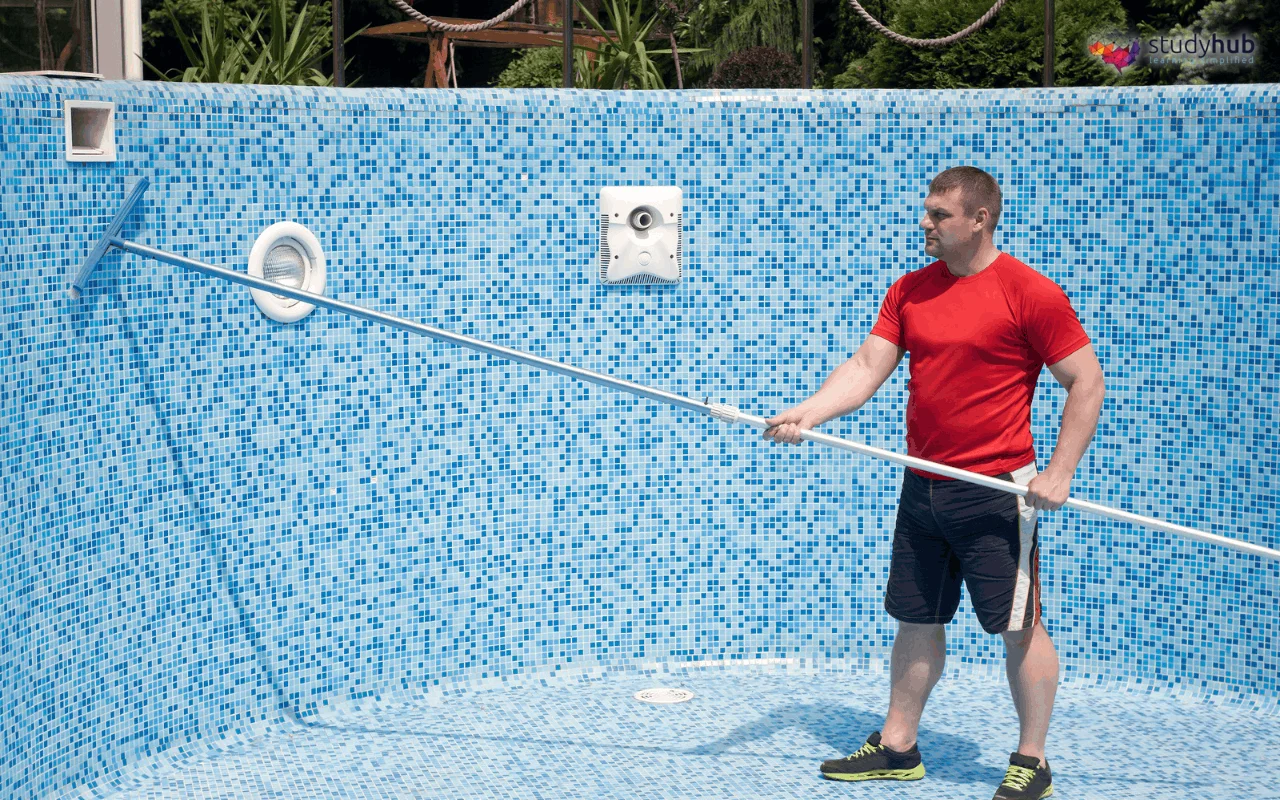
A swimming pool can look clean while hidden problems affect its water quality. Leaves, dirt, blocked filters and incorrect chlorine levels can quickly turn a pleasant swimming experience into a maintenance problem.
A pool cleaning schedule template helps you organise daily checks, weekly cleaning and monthly inspections. It also provides space to record water test results and completed tasks.
If you’re wondering how to balance pool water alongside routine cleaning, a written schedule makes both jobs easier to manage.
This guide provides a practical pool maintenance checklist for UK pool owners and maintenance staff, including water testing, cleaning equipment and routine safety checks.
For additional guidance on how to balance pool water, StudyHub’s Pool Maintenance course covers chemical balance, cleaning methods and water quality.
Free Printable Pool Cleaning Schedule Template
A pool cleaning schedule template should clearly show what needs checking, when each task should be completed and who is responsible.
The following checklist can be copied into a document, printed on A4 paper and used as a basic maintenance record.
| Frequency | Maintenance Tasks | Completed |
|---|---|---|
| Daily | Check chlorine, pH and water clarity | ☐ |
| Daily | Remove floating leaves and debris | ☐ |
| Daily | Inspect water circulation and equipment | ☐ |
| Weekly | Brush pool walls, steps and corners | ☐ |
| Weekly | Vacuum the pool floor | ☐ |
| Weekly | Inspect filter condition and baskets | ☐ |
| Monthly | Inspect pumps, pipes and fittings | ☐ |
| Monthly | Review water testing and maintenance records | ☐ |
| Monthly | Check chemical storage and equipment condition | ☐ |
This is a basic checklist, not a substitute for a public pool’s operating procedures.
What Should a Pool Cleaning Template Include?
A useful printable pool maintenance checklist should include:
- Date and time: Record when each check takes place.
- Water readings: Include chlorine, pH and other required measurements.
- Cleaning tasks: Mark completed jobs clearly.
- Equipment checks: Note faults, leaks or unusual noises.
- Corrective actions: Record problems and the action taken.
- Staff initials: Identify who completed each check.
For those checking how to balance pool water, the log should also record any chemical adjustments and follow-up test results.
Daily Pool Maintenance Checklist
Daily pool maintenance focuses on water quality, visible cleanliness and equipment performance.
A daily pool maintenance checklist is particularly important for busy facilities where water conditions can change throughout the day.
Water Testing and Safety Checks
Start by testing the pool water with a suitable testing kit.
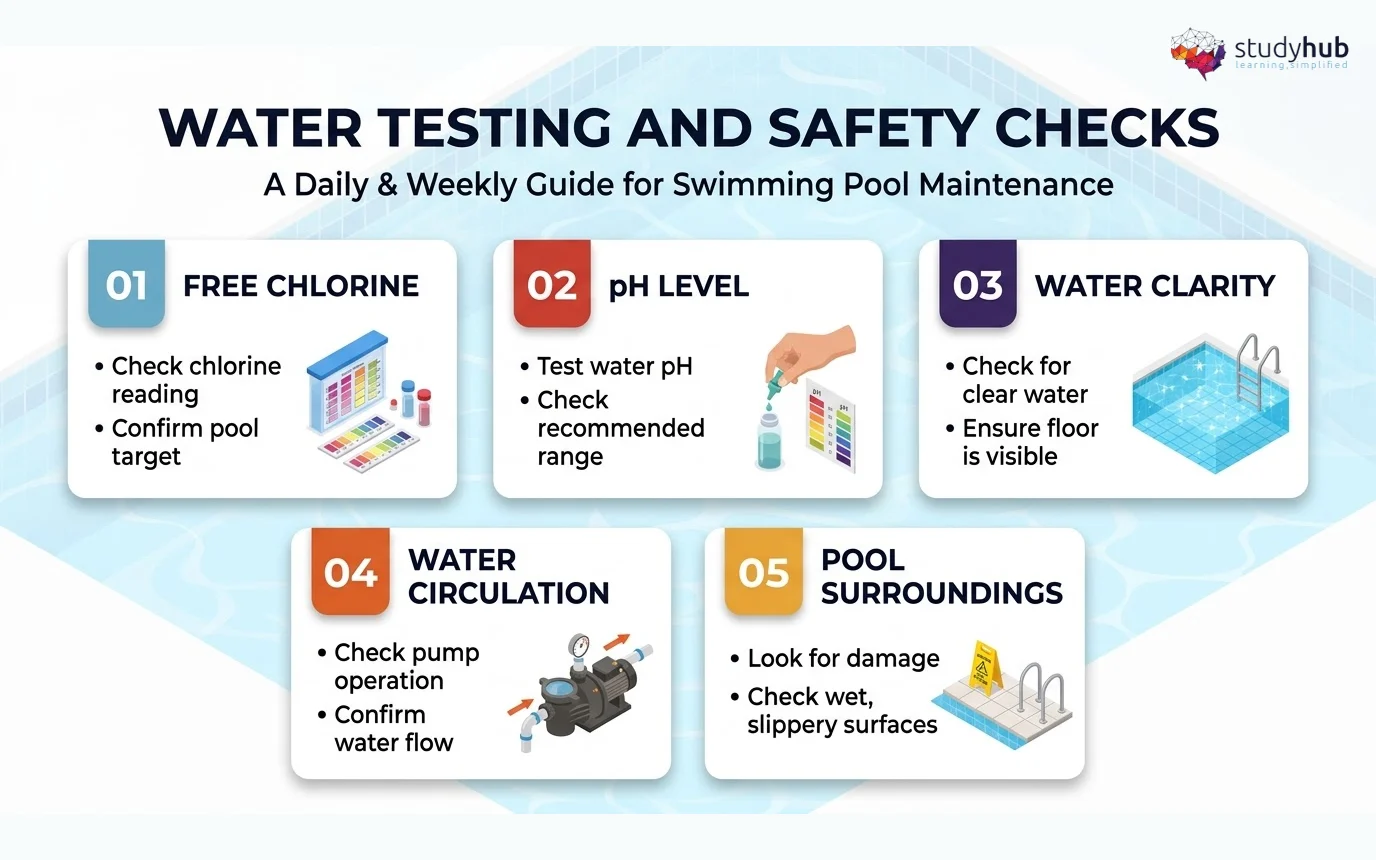
Check the following:
- Free chlorine: Confirm the reading meets the pool’s operating target.
- pH: Check that the water is within the appropriate range.
- Water clarity: Ensure the pool floor and relevant safety features remain visible.
- Circulation: Confirm water is moving correctly through the system.
- Pool surroundings: Check for visible damage, obstacles or slip hazards.
Understanding how to balance pool water helps operators recognise when chlorine and pH readings need attention.
The Pool Water Treatment Advisory Group (PWTAG) provides recognised UK guidance on swimming pool water treatment and monitoring.
Public pools may require repeated tests throughout opening hours. The correct frequency depends on the operating system and risk assessment.
Surface Cleaning and Equipment Checks
After testing, remove leaves, insects and other floating debris with a suitable pool net.
Check skimmer baskets and inspect accessible equipment for unusual sounds, leaks or reduced water movement.
If the water appears cloudy or equipment is not working correctly, report the problem before allowing normal pool use to continue.
Knowing how to balance pool water is useful, but proper filtration and cleaning are equally important for maintaining suitable swimming conditions.
Weekly Pool Maintenance Checklist
A weekly pool maintenance checklist covers cleaning tasks that may need more time than routine daily checks.
The exact schedule depends on pool use, weather conditions and equipment.
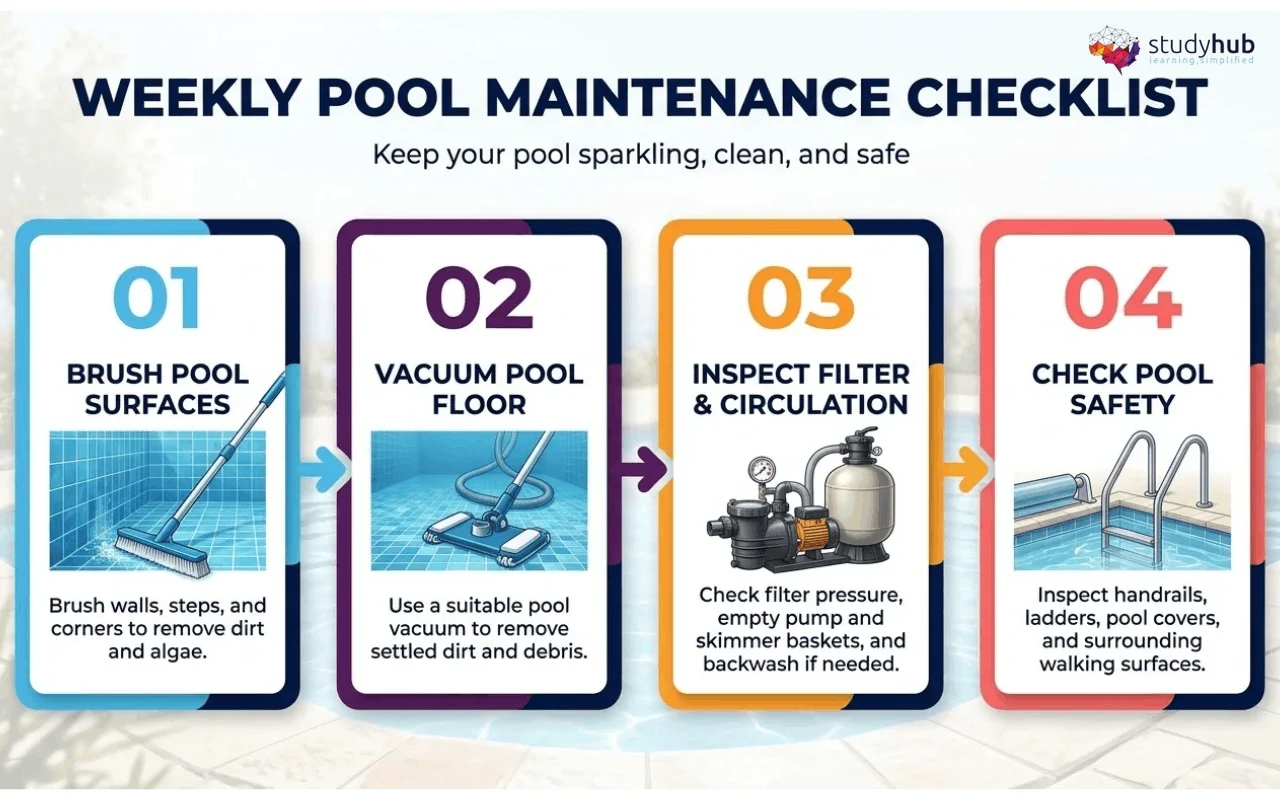
Brush Pool Walls, Steps and Corners
Brush areas where dirt and algae can collect, including steps, corners and around fittings.
Use cleaning tools suitable for your pool surface. Pay particular attention to areas with limited water movement.
Regular brushing helps prevent deposits from building up.
Vacuum the Pool Floor
Vacuum the floor to remove settled dirt that surface cleaning cannot reach.
Manual or automatic pool vacuums may be suitable, depending on the pool design.
Check the equipment manufacturer’s instructions before use.
Inspect the Filter and Circulation System
Check filter pressure, pump performance and accessible baskets.
Clean or backwash the filter when required by its condition and operating instructions, rather than automatically every week.
Regular equipment checks also support how to balance pool water, because poor circulation can affect disinfectant distribution and overall water quality.
Check Pool Surrounds and Safety Equipment
Inspect handrails, covers, ladders and nearby walking surfaces.
The Health and Safety Executive’s swimming pool guidance explains that public pool operators must assess risks and take suitable safety measures.
A weekly checklist should therefore cover more than appearance. It should help identify problems before they affect pool users.
A complete pool cleaning schedule template should combine cleaning, safety checks and water testing. For further information on how to balance pool water, see How to Balance Pool Water..
Monthly Pool Cleaning and Equipment Checklist
Monthly maintenance focuses on equipment condition, water quality records and problems that routine cleaning might miss. Adding these checks to your pool cleaning schedule template helps prevent small faults from becoming expensive repairs.
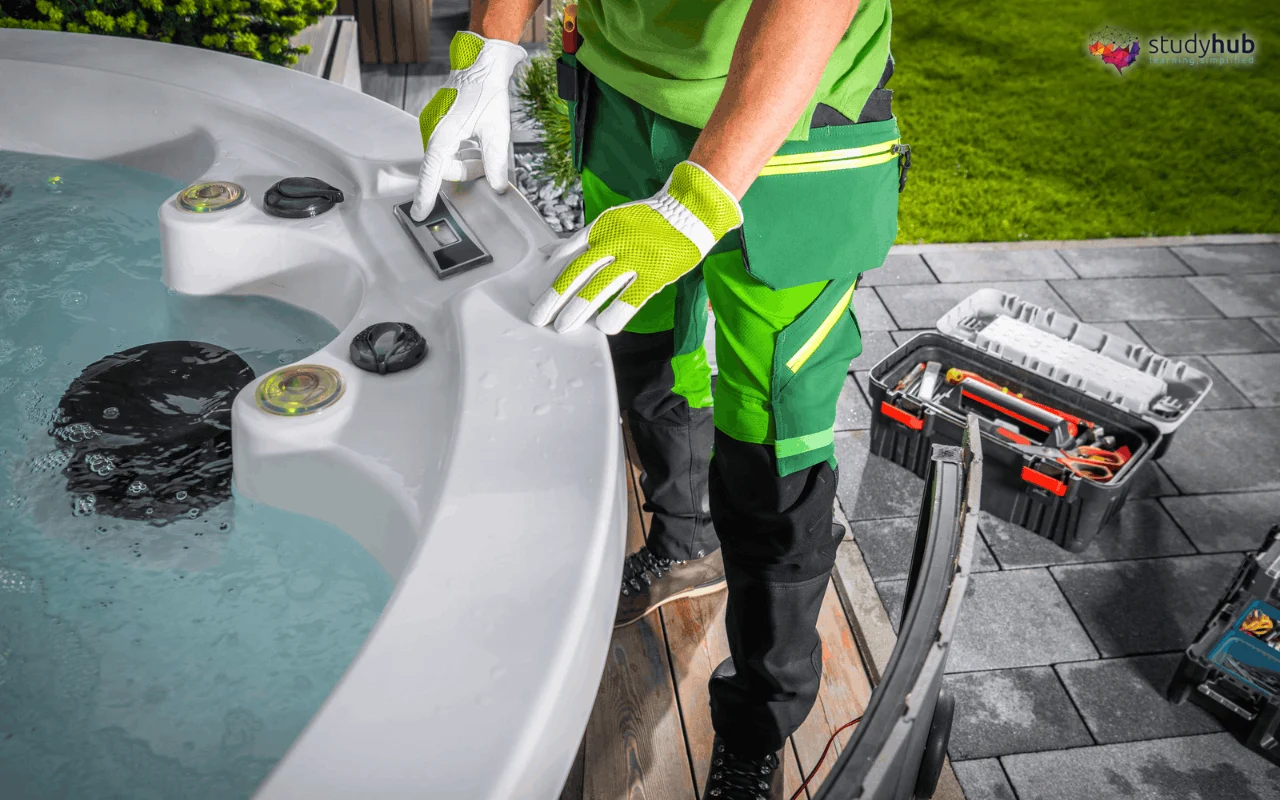
Inspect Pumps, Filters and Fittings
Check the condition of important pool equipment, including:
- Pumps: Check for unusual noises, leaks or reduced performance.
- Filters: Inspect pressure readings and maintenance records.
- Pipes and fittings: Look for visible damage or water leaks.
- Ladders and handrails: Check that fittings remain secure.
- Cleaning equipment: Inspect brushes, nets and vacuum parts.
Follow the manufacturer’s maintenance instructions. Some equipment requires professional inspection at specific intervals.
Review Water Testing Records
Review previous chlorine, pH and other water test results. Look for repeated problems, missing readings or chemical adjustments that did not resolve an issue.
Understanding how to balance pool water helps identify unusual readings, but operators should follow approved procedures before making corrections.
Check Chemical Storage and Supplies
Inspect chemical containers, labels and storage areas. Chemicals must be stored securely, with incompatible products kept separate.
Only appropriately trained people should handle or transfer pool chemicals.
The PWTAG chemical handling guidance provides further information for UK pool operators.
How to Complete a Swimming Pool Maintenance Log Sheet
A pool maintenance log sheet records completed work and helps identify recurring problems.
Your pool cleaning schedule template should include these details:
- Pool name, date and test time.
- Free chlorine, total chlorine and pH readings.
- Cleaning and equipment checks.
- Problems identified during inspection.
- Corrective action and follow-up results.
- Name or initials of the responsible person.
Example of a Completed Maintenance Record
| Record | Example |
|---|---|
| Date | 9 November 2026 |
| Inspection | Morning pool check |
| Problem | Water appears cloudy |
| Action | Reported to the responsible operator |
| Follow-up | Water testing and filtration inspection required |
| Status | Awaiting confirmation |
This is a fictional example, not an actual pool inspection record.
A complete swimming pool water testing log should also contain the actual test readings, applicable limits and any authorised corrective work.
How Often Should You Clean a Swimming Pool in the UK?
Cleaning frequency depends on the pool’s use, surroundings, equipment and operating conditions.
Private Home Pools
Domestic pools may need daily debris removal during heavy use or when leaves are falling. Brushing, vacuuming and equipment checks should follow the pool’s condition and manufacturer’s instructions.
During warm weather, water testing may also need to become more frequent.
Public and Commercial Swimming Pools
Public pools require more detailed monitoring based on their risk assessment and operating procedures.
The Health and Safety Executive explains that pool operators must manage risks to workers and swimmers.
A basic pool cleaning schedule template does not replace the pool’s formal safety procedures or the monitoring arrangements recommended by PWTAG.
Common Pool Maintenance Problems to Record
Your checklist should explain what happened and whether further action is needed.
| Problem | Recommended First Action |
|---|---|
| Cloudy water | Check water tests and filtration; restrict use if visibility is unsafe |
| Green water or algae | Check disinfectant readings and cleaning records |
| Unusual chlorine reading | Repeat the test and follow the approved procedure |
| Falling water level | Inspect for leaks and unusual water loss |
| Filter pressure problem | Check equipment instructions and report the fault |
If you are unsure how to balance pool water after an unusual reading, avoid adding chemicals without confirming the cause.
Pool Maintenance Training for Beginners
A reliable maintenance routine requires more than ticking boxes. Water treatment, filtration, cleaning equipment and safety procedures all affect pool conditions.
StudyHub’s Pool Maintenance course covers maintenance equipment, cleaning methods, chemical balance, water quality and pool safety.
The course provides flexible online introductory training for pool owners and people interested in maintenance responsibilities.
However, it does not replace supervised practical training, site-specific operating procedures or professional chemical-handling competence.
Pool Maintenance Training
Learn pool cleaning, water chemistry and equipment care with a CPD accredited course

Final Thoughts
A well-organised pool cleaning schedule template helps keep swimming pool maintenance consistent, manageable and effective. By separating daily cleaning, weekly tasks and monthly inspections, pool owners and maintenance staff can reduce missed checks and spot potential problems before they become serious.
Regular water testing, filter inspections and equipment checks are essential for maintaining suitable swimming conditions. Recording chlorine levels, pH readings, cleaning activities and corrective actions also makes it easier to track changes and identify recurring issues.
However, every swimming pool has different requirements depending on its size, usage, equipment and surrounding environment. Your maintenance checklist should reflect these conditions and follow relevant UK safety guidance.
Consistent maintenance, accurate records and timely action are key to keeping a swimming pool clean, well-maintained and ready for use.
Frequently Asked Questions
How Often Should a Swimming Pool Be Cleaned?
Visible debris should be removed as needed, while brushing, vacuuming and equipment checks depend on pool usage and conditions. Public pools follow their own risk-based maintenance procedures.
What Should a Pool Cleaning Schedule Include?
A pool cleaning schedule template should include water tests, surface cleaning, filtration checks, equipment inspections, completion dates and corrective-action records.
How Often Should Pool Chlorine Be Checked?
Public pool operators follow PWTAG guidance and site procedures, which can require several checks daily. Domestic pool testing depends on use and treatment equipment.
Should I Backwash My Pool Filter Every Week?
Not necessarily. Filter backwashing depends on the filter type, pressure readings and manufacturer’s instructions.
- All Courses
- IT & Software390
- Management287
- Teaching and Education250
- Business245
- Health and Fitness227
- Engineering & Technology180
- Health & Safety163
- Health and Social Care144
- Quality Licence Scheme139
- Healthcare137
- Accounting & Finance130
- Psychology112
- Employability112
- Lifestyle105
- Marketing75
- Office Productivity74
- Animal Care63
- Design and Photography55
- Design50
- Beauty & Makeup49
- Accounting & Bookkeeping34
- Web Development27
- Construction26
- Writing20
- Child Care17
- Digital Marketing13
- Environment10
- Bundle8
- Coaching6
- Agriculture5

Awarded By


0 responses on "Pool Cleaning Schedule Template: Weekly Checklist"