


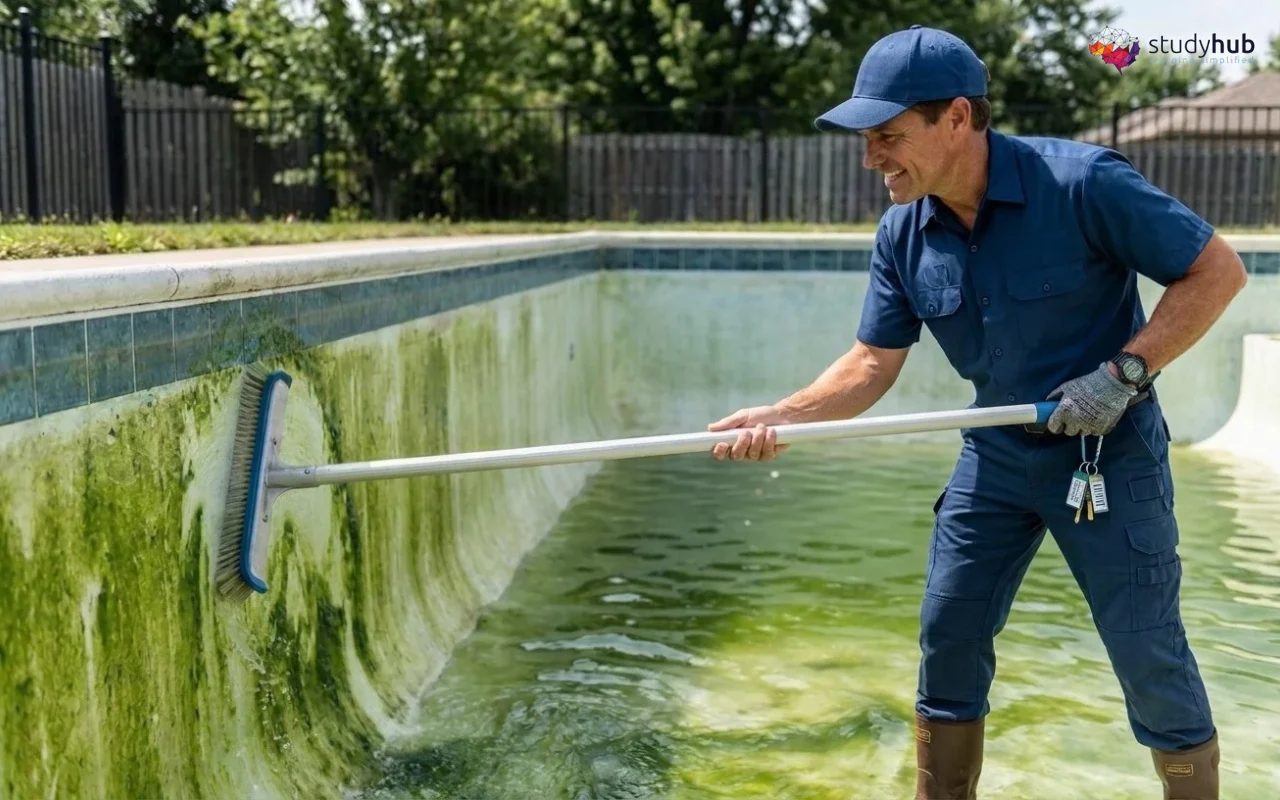
Green water, slippery pool walls or dark patches can quickly spoil a swimming pool. Algae can spread when chlorine levels fall, water circulation becomes poor or cleaning is neglected.
So, how to prevent pool algae? Keep chlorine and pH within suitable ranges, maintain filtration, brush pool surfaces and remove debris regularly. These steps help reduce the conditions that support algae growth.
Understanding how to prevent pool algae also means recognising different algae types and addressing problems before they spread.
StudyHub’s Pool Maintenance course covers cleaning, chemical balance, water quality and pool safety for those interested in practical pool care.
This guide covers the main causes of algae, common warning signs and effective prevention methods for UK swimming pools.
What Causes Algae in a Swimming Pool?
Pool algae are simple organisms that can grow when water treatment and cleaning are inadequate. Outdoor pools are particularly vulnerable because sunlight supports algae growth.
According to the Pool Water Treatment Advisory Group (PWTAG), sunlight, contaminated equipment and phosphates can contribute to algae problems.
Understanding these causes is essential when deciding how to prevent pool algae.
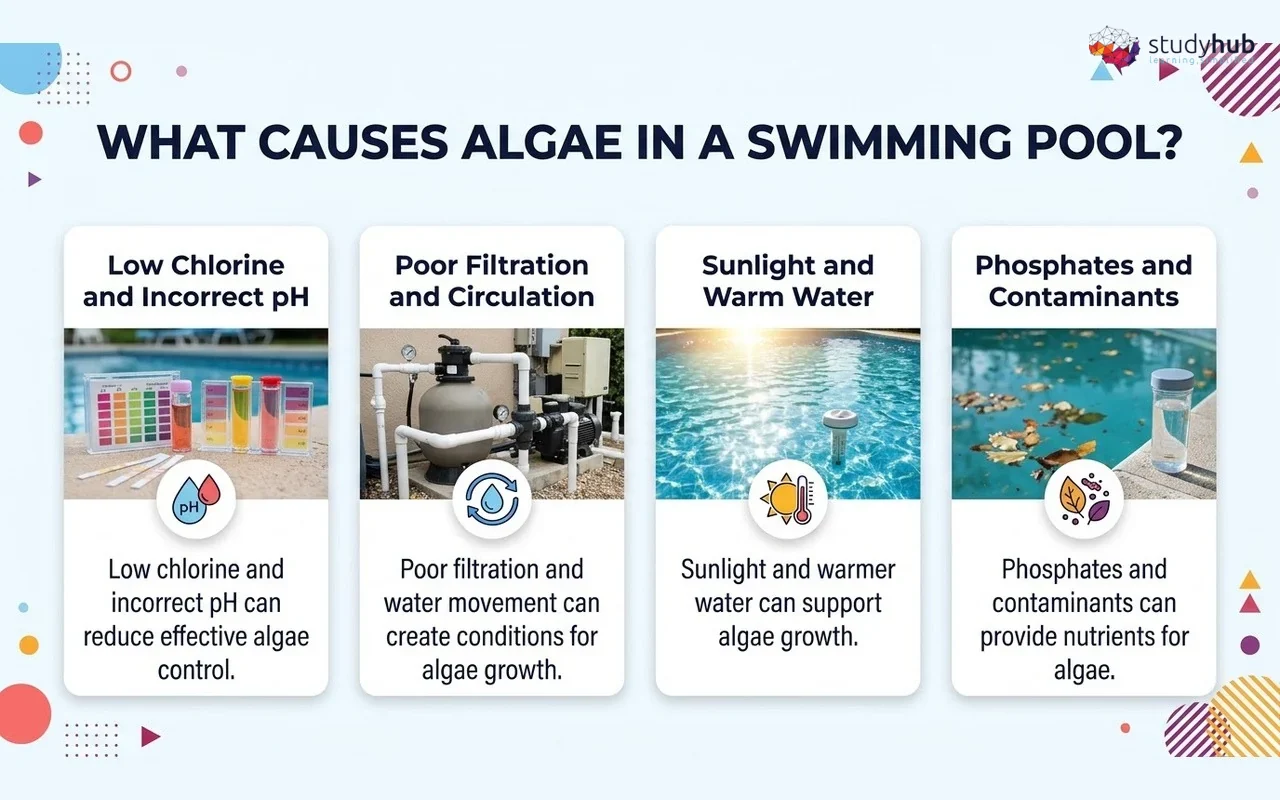
Low Chlorine and Incorrect pH
Chlorine helps control algae and other microorganisms in swimming pool water.
When free chlorine falls below the pool’s required operating level, algae may begin growing on walls, steps or other surfaces.
Incorrect pH can also reduce chlorine’s effectiveness.
For consistent water treatment, check chlorine and pH together rather than relying on a single reading.
For more detailed guidance, see Swimming Pool Chlorine Levels in the UK Explained.
Poor Filtration and Water Circulation
Filtration removes unwanted particles, while circulation distributes treated water throughout the pool.
Blocked filters, poor water movement and areas with limited circulation can encourage algae growth.
Check pump operation, filter condition and water flow regularly.
When considering how to prevent pool algae, proper circulation is just as important as chemical treatment.
Sunlight, Warm Water and Phosphates
Sunlight encourages algae growth, making outdoor swimming pools more vulnerable during warmer months.
Phosphates provide nutrients that can support algae. They may enter pool water through certain cleaning products, filling water or other contaminants.
Removing leaves and debris, checking water quality and maintaining effective disinfection can help reduce recurring problems.
However, phosphate removal does not replace chlorine treatment or regular cleaning.
Green vs Mustard vs Black Pool Algae
Different algae problems can produce different colours and patterns. Recognising these signs helps determine what needs checking.
| Algae Type | Common Appearance | Main Concern |
|---|---|---|
| Green algae | Green water or slippery green surfaces | Can spread quickly |
| Mustard algae | Yellow or brown powder-like patches | May return after incomplete treatment |
| Black algae | Dark spots firmly attached to surfaces | Often difficult to remove |
Colour alone cannot confirm the type of algae. Dirt, stains and other surface growth may look similar.
Green Algae in a Pool
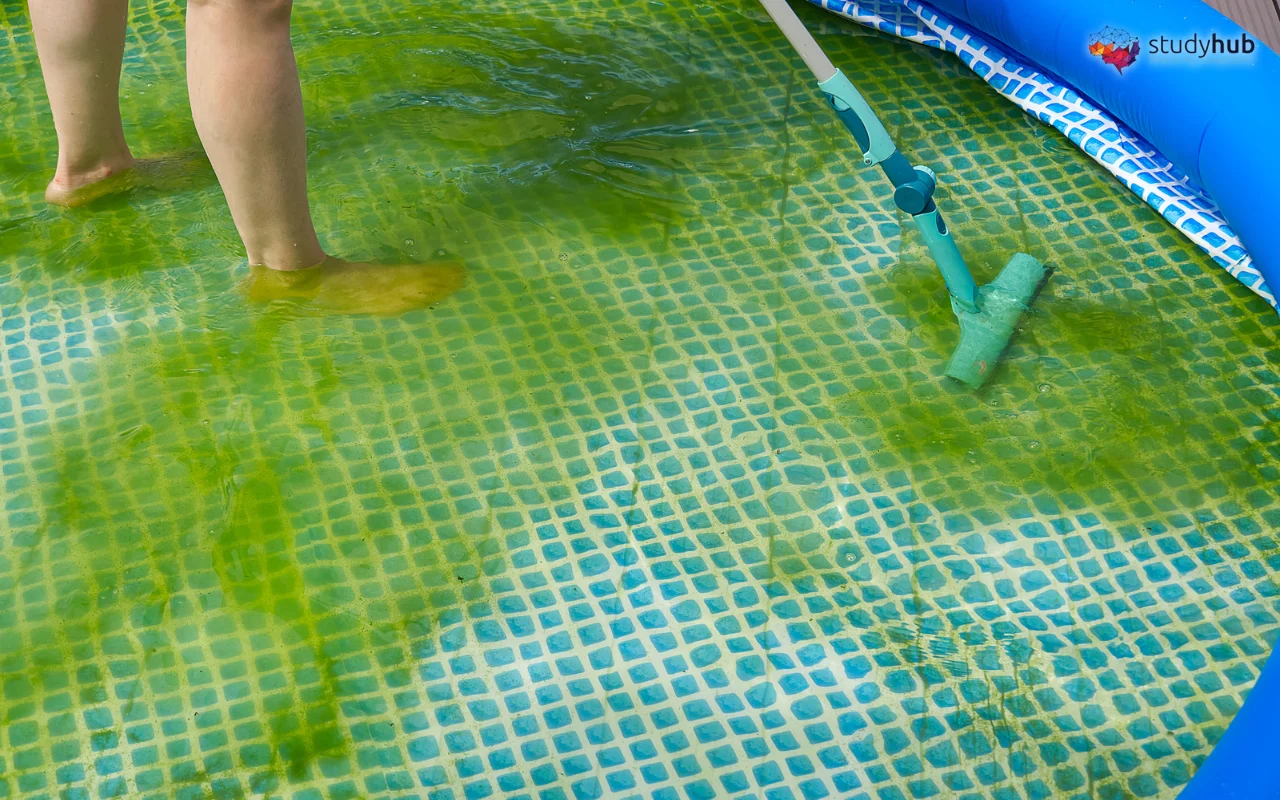
Green algae are commonly associated with green or cloudy water and slippery pool surfaces.
Possible causes include insufficient disinfection, poor circulation and inadequate cleaning.
If you’re checking how to prevent pool algae, test chlorine and pH, inspect the filtration system and remove visible debris.
Avoid swimming when water clarity or treatment conditions are unsuitable.
Mustard Algae in a Pool
Mustard algae often appear as yellow-brown patches, particularly in shaded areas.
These patches can resemble dust or dirt and may return if cleaning and treatment are incomplete.
Inspect walls, steps, pool equipment and cleaning tools. Follow appropriate treatment procedures rather than repeatedly adding chemicals without checking the cause.
Black Algae in a Pool
Black algae may appear as dark spots firmly attached to pool surfaces, especially rough or porous areas.
These patches can be difficult to remove through ordinary cleaning.
Use brushes suitable for the pool surface and investigate the water treatment system.
Avoid applying concentrated chlorine directly to surfaces without an approved procedure, as this could damage the pool.
How to Prevent Pool Algae: Six Practical Steps
Effective algae prevention depends on consistent water care, not occasional chemical treatment.
Here are six practical steps for how to prevent pool algae in UK swimming pools.
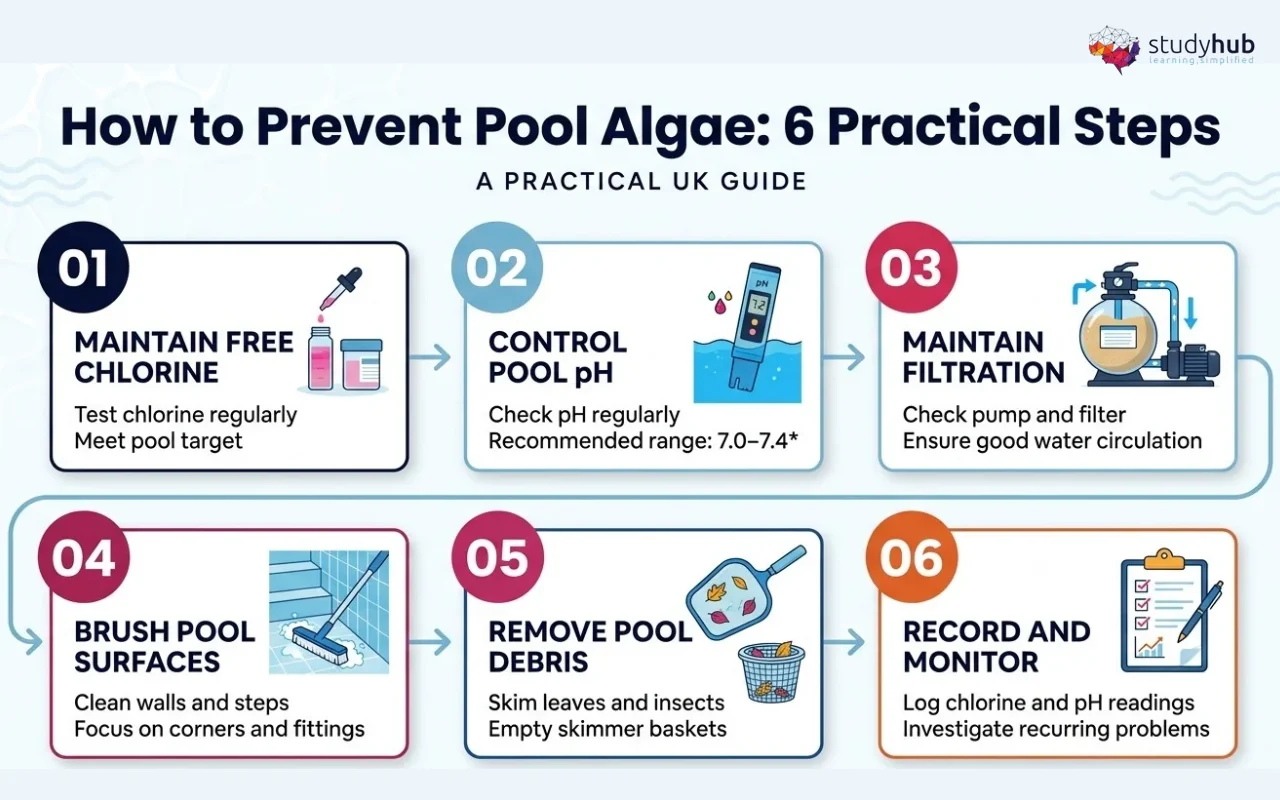
Step 1 — Maintain the Correct Free Chlorine Level
Free chlorine helps control algae growth and disinfect pool water.
To maintain suitable chlorine levels:
- Test free chlorine using an appropriate water testing kit.
- Compare the result with your pool’s operating target.
- Check dosing equipment if readings are consistently low.
- Record unusual results and corrective actions.
The correct level depends on the disinfectant, pH and pool conditions. Do not assume one chlorine target applies to every pool.
Step 2 — Keep Pool pH Within the Recommended Range
pH affects how effectively chlorine works.
PWTAG recommends a pH range of 7.0–7.4 for relevant chlorine-treated public pools, ideally towards 7.0–7.2.
For anyone researching how to prevent pool algae, keeping pH under control is an important part of maintaining effective disinfection.
Check pH regularly and use only suitable adjustment products according to the pool’s operating instructions.
Step 3 — Maintain Filtration and Water Circulation
Good circulation helps distribute disinfectant and prevents untreated areas from developing.
Check filter pressure, pump performance and water movement. Clean or backwash filters when required by their condition and manufacturer instructions.
The PWTAG pool troubleshooting guidance identifies poor circulation and low disinfectant levels as possible causes of algae growth.
A consistent approach to how to prevent pool algae should also form part of wider.
Step 4 — Brush Pool Walls, Steps and Corners
Regular brushing removes dirt and early algae growth from pool surfaces. Focus on steps, corners, ladders and areas with poor water movement.
Use a brush suitable for your pool’s surface. For anyone checking how to prevent pool algae, brushing should be part of routine maintenance, not just something done when green patches appear.
Step 5 — Remove Leaves and Other Debris
Leaves, insects and dirt can introduce organic matter and increase the demand for disinfectant.
Remove floating debris with a pool net and check skimmer baskets regularly. Vacuum settled dirt when necessary.
Keeping the pool clean supports how to prevent pool algae and reduces unnecessary pressure on the filtration system.
Step 6 — Record Readings and Fix Recurring Problems
Keep a simple record of chlorine, pH, water clarity and equipment checks.
If algae keeps returning, review previous results to identify patterns. Repeated low chlorine readings or poor circulation may point to an underlying problem.
Regular monitoring is an essential part of how to prevent pool algae.
How to Remove Pool Algae Safely
If algae is already visible, start by identifying the likely cause. Treatment should address both the growth and the conditions allowing it to spread.
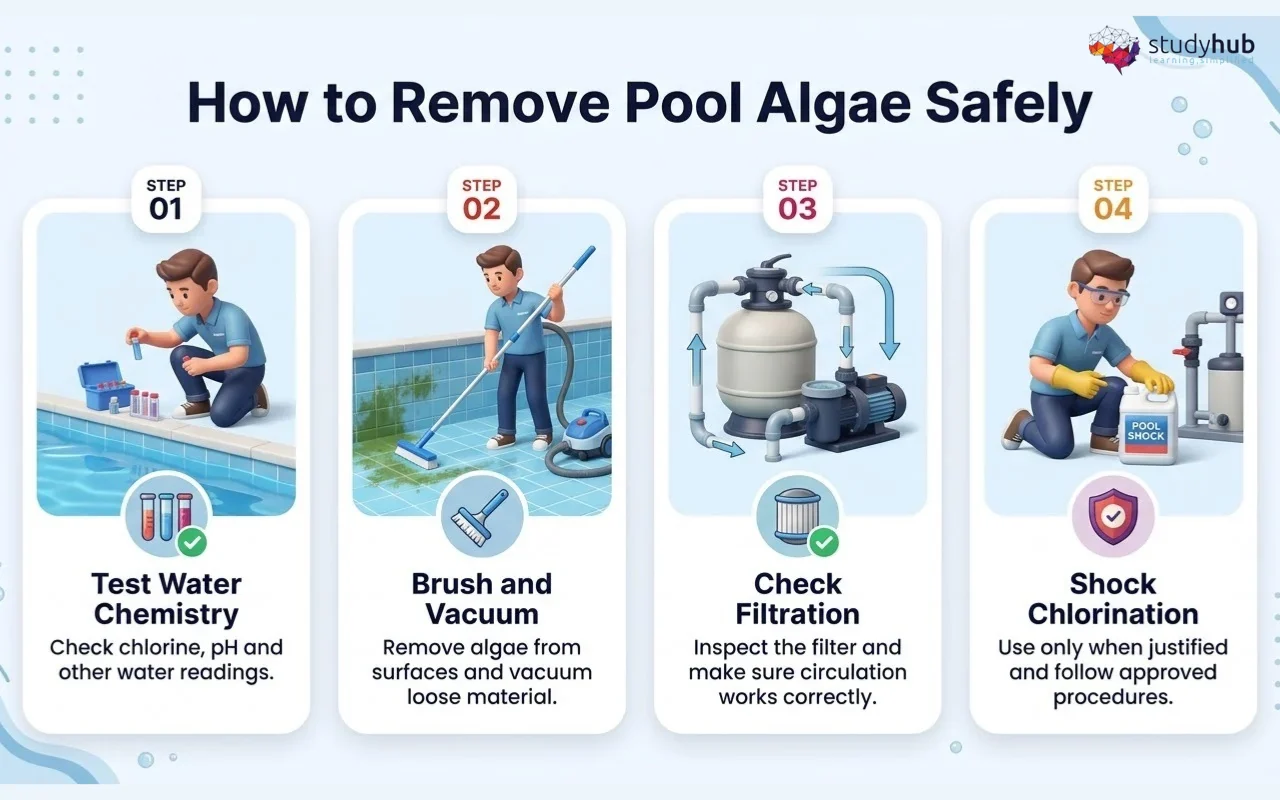
Check Water Chemistry and Pool Safety
Test free chlorine, pH and other relevant water measurements. Check whether the filtration system is working correctly.
Keep swimmers out if water clarity, disinfection or other operating conditions are unsuitable.
The HSE swimming pool safety guidance explains the importance of managing water-treatment and chemical risks.
Brush, Vacuum and Check Filtration
Brush affected surfaces using suitable equipment. Vacuum loose material and inspect the filter.
Do not assume that adding chemicals alone will remove every algae problem. Persistent black spots or recurring yellow patches may require specialist assessment.
When Is Shock Chlorination Necessary?
Shock chlorination involves raising chlorine to a higher concentration for a controlled treatment period.
However, PWTAG advises against routine superchlorination to compensate for poor water treatment.
Its superchlorination guidance explains that treatment may be justified for specific contamination or operational problems.
Professional operators should follow approved procedures, including pool closure, treatment monitoring and safe reopening.
How to Calculate Chlorine Needed for Pool Treatment
Understanding how to prevent pool algae also involves recognising how pool volume affects chlorine treatment.
The theoretical chlorine increase can be calculated using:
Chlorine equivalent (g) \= Pool volume (L) × Required increase (mg/L) ÷ 1,000
For example, consider a 40,000-litre pool requiring a calculated increase of 2 mg/L:
40,000 × 2 ÷ 1,000 \= 80 g of chlorine equivalent.
This is a mathematical example, not a recommended treatment target or product dose.
Actual dosing depends on the chlorine product’s strength, existing water chemistry, chlorine demand and approved treatment procedure.
Never use this calculation alone to decide how much chemical to add.
Does Phosphate Removal Help Prevent Pool Algae?
Phosphates are nutrients that can support algae growth. They may enter swimming pools through filling water, organic debris and certain cleaning products.
PWTAG’s phosphate guidance identifies phosphate as a factor affecting pool water quality.
When Should You Test for Phosphates?
Consider phosphate testing when algae repeatedly returns despite suitable chlorine, pH, filtration and cleaning.
Record the results and investigate possible sources before choosing a treatment.
Are Phosphate Removers Necessary?
Not always. Phosphate removers may help manage particular nutrient problems, but they cannot replace disinfection or filtration.
For effective how to prevent pool algae practices, prioritise water treatment and cleaning before considering additional products.
Weekly Pool Algae Prevention Checklist
A practical pool algae prevention UK routine should include:
- Check chlorine and pH at the frequency required for the pool.
- Inspect pumps, filters and circulation.
- Brush walls, steps and corners.
- Remove leaves and floating debris.
- Check water clarity and visible surfaces.
- Record unusual readings and corrective actions.
Public pools require more frequent monitoring than this weekly checklist alone.
Pool Maintenance Training for Algae Control
Preventing algae involves several connected tasks, including chemical balance, equipment checks and regular cleaning.
StudyHub’s Pool Maintenance course covers maintenance equipment, cleaning methods, chemical balance, water quality and pool safety.
The course provides introductory online training for pool owners and people interested in maintenance work. It does not replace site-specific instruction or professional chemical-handling competence.
Pool Maintenance Training
Learn pool equipment, cleaning methods, water chemistry and safety checks, studied online from home.
Final Thoughts
Understanding how to prevent pool algae is essential for maintaining clean, clear and well-managed swimming pool water. Algae problems often develop when chlorine levels fall, water circulation becomes poor or routine cleaning is overlooked.
Maintaining suitable chlorine and pH levels, checking filtration systems and brushing pool surfaces regularly can help reduce algae growth. Removing leaves and debris also limits the build-up of unwanted contaminants.
Green, mustard and black algae may require different treatment methods, so identifying the problem before taking action is important. Repeated outbreaks should prompt checks of water chemistry, circulation and cleaning routines.
A consistent maintenance schedule, accurate water testing and timely corrective action can reduce recurring algae problems and help maintain suitable swimming conditions throughout the year.
Frequently Asked Questions
What Kills Pool Algae the Fastest?
Appropriate disinfection and physical cleaning can control algae, but treatment depends on the cause and pool conditions. There is no guaranteed instant solution.
Will Chlorine Kill Algae in a Swimming Pool?
Yes. Correctly maintained chlorine helps control algae. However, poor circulation, unsuitable pH and contaminated surfaces can allow problems to continue.
Is It Safe to Swim in a Green Pool?
Do not swim when algae, poor visibility or unsuitable water-treatment conditions are present. Investigate the problem and confirm safe operating conditions before reopening.
Why Does Pool Algae Keep Coming Back?
Recurring algae may indicate low disinfectant levels, poor circulation, inadequate cleaning or nutrient problems. Check maintenance records and equipment rather than repeatedly adding chemicals.
- All Courses
- IT & Software390
- Management287
- Teaching and Education250
- Business245
- Health and Fitness227
- Engineering & Technology180
- Health & Safety163
- Health and Social Care144
- Quality Licence Scheme139
- Healthcare137
- Accounting & Finance130
- Psychology112
- Employability112
- Lifestyle105
- Marketing75
- Office Productivity74
- Animal Care63
- Design and Photography55
- Design50
- Beauty & Makeup49
- Accounting & Bookkeeping34
- Web Development27
- Construction26
- Writing20
- Child Care17
- Digital Marketing13
- Environment10
- Bundle8
- Coaching6
- Agriculture5

Awarded By


0 responses on "How to Prevent Pool Algae: Causes and Solutions"