


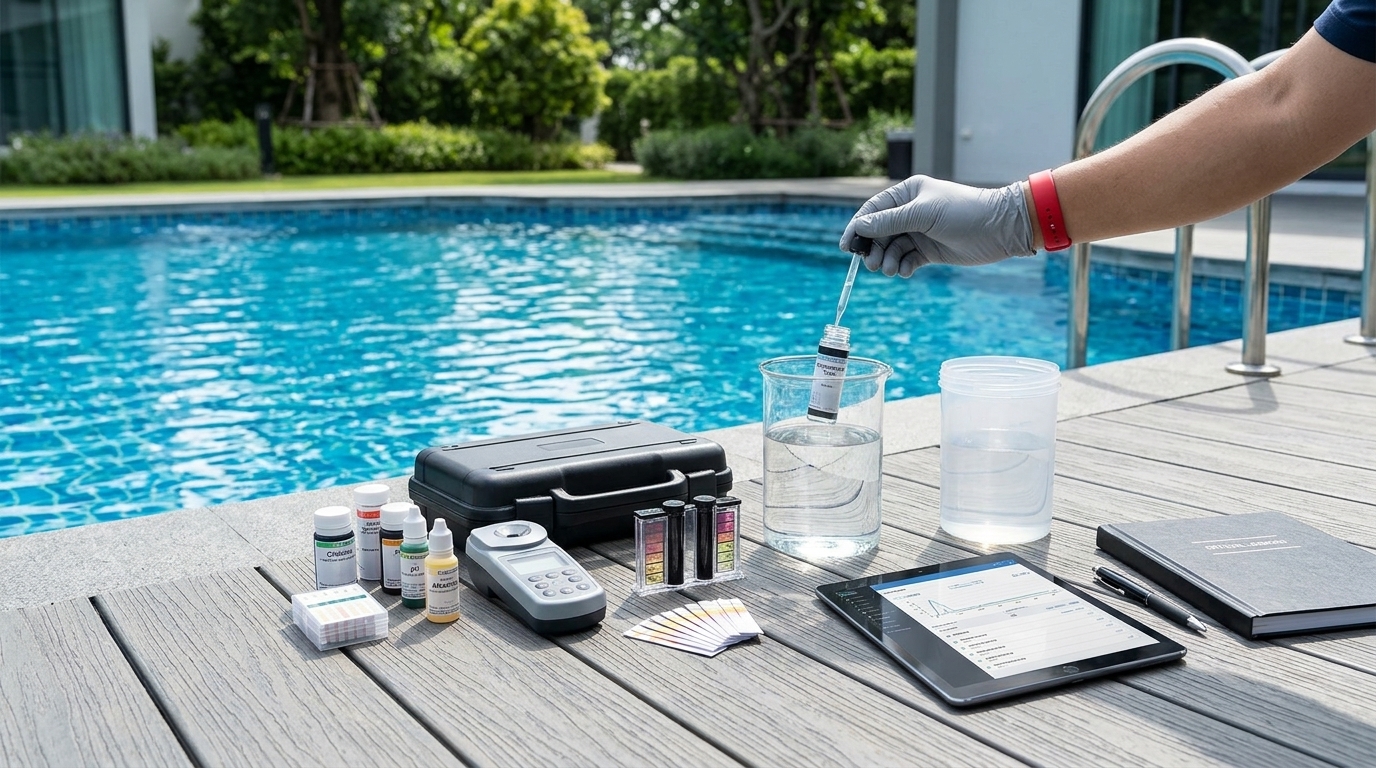
A swimming pool can look sparkling clean, but clear water does not always mean it is safe to use. Water quality can change throughout the day, so regular testing is essential to help pool staff spot problems and maintain suitable bathing conditions. Knowing how to test the water is therefore an important part of pool maintenance.
A pool water testing course introduces learners to key tasks such as collecting water samples, using test strips, handling liquid reagents, operating photometers and understanding test results. It can also explain why accurate testing records matter and how staff should report unusual readings. Some courses provide introductory knowledge, while others include practical training and assessment.
Whether you are a lifeguard, pool operator or maintenance assistant, this guide explores the skills, equipment and UK training options that can help you understand your water-testing responsibilities.
Build your pool maintenance knowledge
Study the basics at your own pace. Check the course details and certificate terms before you enrol.
Explore the courseWhat Is a Pool Water Testing Course?
A pool water testing course teaches learners how to check swimming pool water and understand the results. It may cover sample collection, chemical testing, equipment use and record-keeping.
Testing is an important part of pool operation. Staff need to check water readings and follow the pool’s operating procedures. They must also know when to report an unusual result or carry out a follow-up test.
A pool water testing course may cover:
How to collect a suitable water sample.
How to use test strips and liquid reagent kits.
How to operate a comparator or photometer.
How to check chlorine and pH readings.
How to understand and record test results.
How to recognise common testing errors. change this buleet icon use any ther icon
The training you need depends on your job. Someone who carries out routine water checks may need specific practical testing skills. A person responsible for the wider pool system may need further training in water treatment and pool plant operations.
Pool Water Testing vs Pool Water Treatment
These terms are related, but they do not mean the same thing.
| Training area | Main focus |
|---|---|
| Pool water testing | Taking samples, checking water readings and recording results |
| Pool water treatment | Understanding disinfection, water balance and treatment methods |
| Pool plant operations | Managing wider systems such as pumps, filters, circulation and heating |
For example, a pool water testing course may teach you how to measure chlorine and pH. A wider treatment course may also explain how filtration and disinfection help maintain water quality.
The term pool plants can refer to pool plant systems and equipment, such as pumps, filters and dosing units. In this guide, we use it in that technical sense.
By contrast, pool planting and poolside plants refer to landscaping around a swimming pool. They are different topics from water testing and pool plant operations.
Why Is Pool Water Testing Important?
Regular water testing helps pool staff check water quality and identify readings that may need attention. Clear water does not always mean that the water is properly balanced or disinfected.
A pool water testing course helps learners understand why these checks matter and how to carry them out correctly.
1. Check Disinfectant Levels
Swimming pools use disinfectants to help control harmful microorganisms. Chlorine is a common disinfectant in swimming pools.
Staff may need to check free chlorine and combined chlorine readings. These results help them understand the condition of the pool water and follow the correct operating procedure.
2. Monitor pH Levels
pH measures how acidic or alkaline the water is. It is important because pH affects disinfection and water balance.
A pool water testing course can introduce learners to pH testing and help them understand why the result must be read and recorded correctly.
3. Identify Changes in Water Quality
Regular checks help staff notice changes in readings. For example, an unexpected result may require a repeat test or further action under the pool’s procedures.
Staff should not guess what caused a change. They should check the testing method, report the result to the responsible person and follow the correct process.
4. Keep Accurate Records
Testing is not complete when someone reads the result. The reading should also be recorded according to the site’s procedure.
A daily logbook helps staff review readings, track changes and understand what action was taken. This is why record-keeping is an important part of many pool water testing course programmes.
What Skills Do You Learn in a Pool Water Testing Course?
A good pool water testing course should help learners understand the steps involved in accurate water testing.
The exact syllabus depends on the provider. However, practical training may cover sample collection, testing equipment, result interpretation and record-keeping.
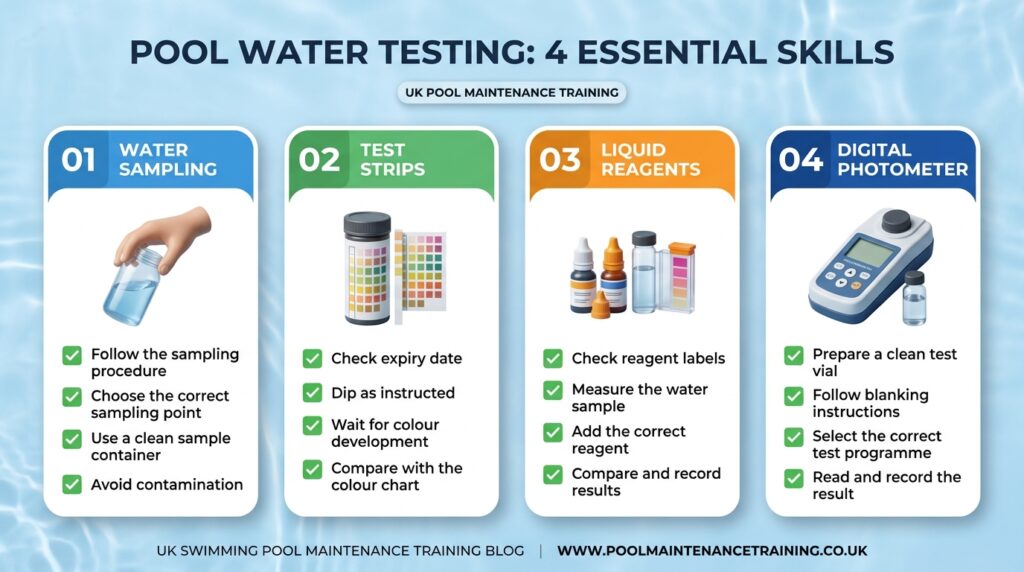
How to Collect a Swimming Pool Water Sample
Accurate testing starts with a suitable water sample. A poor sample may not give a useful picture of the pool’s water quality.
A learner should understand how to:
– Follow the pool’s approved sampling procedure.
– Choose the correct sampling point.
– Use a suitable, clean sample container.
– Collect the sample as instructed.
– Test it within the recommended time.
– Avoid touching or contaminating the sample.
PWTAG guidance provides information about suitable sampling methods and water-testing procedures. Staff should follow the relevant guidance and their pool’s own operating instructions.
Read the PWTAG technical operator guidance for more information about practical pool water testing.
How to Use Pool Water Test Strips
Test strips offer a simple way to check selected water parameters. They usually contain treated pads that change colour when they come into contact with the sample.
The basic process is:
1.Check the product instructions and expiry date.
2.Collect the water sample as directed.
3.Dip the strip for the stated time.
4.Wait for the required colour development time.
5.Compare the strip with the supplied colour chart.
6.Record the result.
Different products may have different instructions. Always follow the manufacturer’s guidance rather than using one fixed dipping or waiting time for every strip.
A pool water testing course can help learners understand how to use testing products and why correct timing matters.
How to Handle Liquid Reagent Test Kits
Liquid reagent kits use chemical solutions to test selected water parameters. The user adds the correct reagent to a measured water sample and checks the result using the supplied method.
A basic procedure may include:
1.Check the reagent name and expiry date.
2.Measure the required water sample.
3.Add the correct amount of reagent.
4.Mix the sample as instructed.
5.Wait for the stated reaction time.
6.Compare the result using the correct scale or comparator.
7.Record the reading.
Reagents must be handled with care. Follow the product label, safety information and workplace chemical-handling procedures. Keep containers labelled and store them as the manufacturer recommends.
Training should also help learners understand why using the wrong reagent or sample volume can affect a result.
How to Use a Pool Water Photometer
A photometer is an electronic instrument used to measure selected water parameters. It analyses how light passes through a prepared sample and displays a result.
A typical testing process may involve:
✓ Preparing a clean test vial.
✓ Collecting the required water sample.
✓ Following the instrument’s blanking or zeroing instructions.
✓ Adding the correct reagent, if required.
✓ Placing the vial in the correct position.
✓ Selecting the right test programme.
✓ Reading and recording the result.
✓ Cleaning and storing the equipment as instructed.
The exact method depends on the photometer and the test being carried out. Always follow the manufacturer’s instructions.
The STA Level 2 Award in Swimming Pool Water Testing includes learning how to use a comparator and photometer. It also covers sampling, chlorine and pH readings, and understanding test results. Read the STA qualification information for further details.
How to Interpret Pool Water Test Results
Taking a reading is only one part of water testing. Staff must also understand what the result means.
Common measurements include:
Free chlorine: The available chlorine disinfectant in the water.
Combined chlorine: Chlorine that has combined with other substances.
Total chlorine: The overall chlorine reading.
pH: A measure of how acidic or alkaline the water is.
Total alkalinity: A measure linked to the water’s ability to resist changes in pH.
Calcium hardness: The amount of calcium in the water.
A pool water testing course can introduce these measurements and explain how to read them. However, acceptable operating limits depend on the pool type, disinfectant system and applicable guidance.
Staff should compare results with the correct standards and follow the site’s procedures. They should not make treatment decisions based on guesswork.
What Should You Record in a Pool Water Testing Logbook?
Daily logbook entries are an important part of pool operation. They help staff keep a clear record of water checks and any action taken after a result.
A pool water testing course should help learners understand why accurate records matter and what information may need to be recorded.
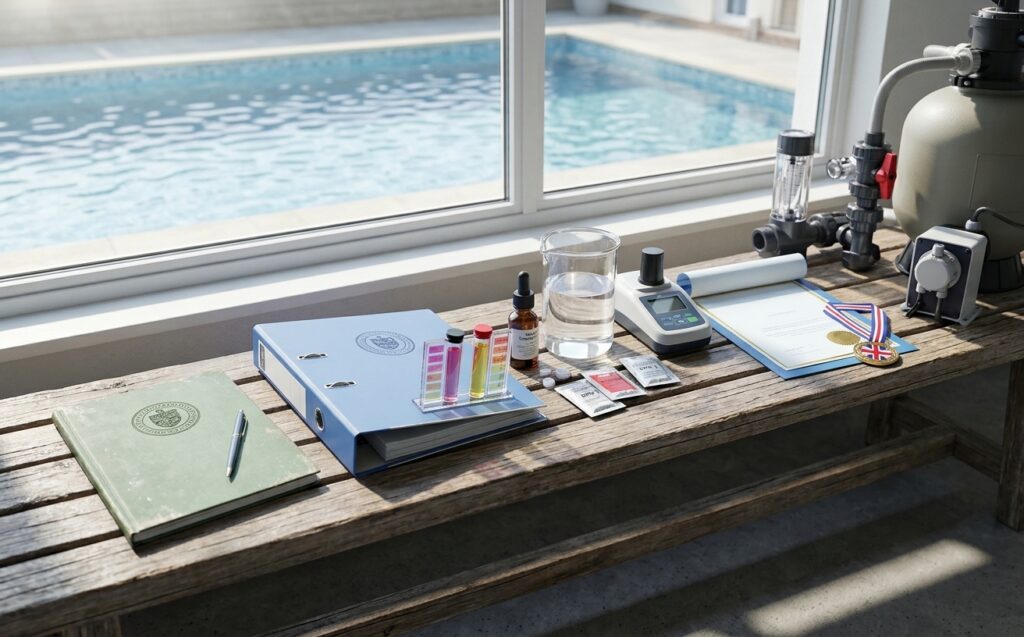
What Information Should a Pool Water Logbook Include?
The exact record depends on the pool’s operating procedures. A typical example may include
| Logbook field | What to record |
|---|---|
| Date | Date of the test |
| Time | Time the sample was tested |
| Pool or location | Which pool or testing point was checked |
| Free chlorine | Test reading |
| Combined chlorine | Test reading, where required |
| pH | Test reading |
| Other checks | Additional parameters required by the site |
| Staff name or initials | Person who carried out the test |
| Action taken | Action recorded under the site's procedure |
| Retest result | Follow-up reading, if required |
This table is an example, not a universal legal template. Each facility should use its approved logbook and record-keeping procedure.
What Should You Do If a Test Result Is Outside the Required Range?
An unusual result should not be ignored. Staff should follow the pool’s documented response procedure.
A sensible process may include:
● Check that the correct testing method was used.
● Check the equipment and reagents.
● Follow the site’s procedure for confirming the result.
● Inform the responsible person.
● Record the reading and any action taken.
● Complete a follow-up test if required.
● Follow the site’s instructions about pool use and further action.
Do not try to correct a water-quality problem without the right training and authority. Chemical handling and treatment must follow the facility’s safety procedures.
The PWTAG swimming and spa pool water testing syllabus includes practical testing, interpreting results, documentation and record-keeping. These are useful areas to understand if you are responsible for daily pool checks.
What Pool Water Testing Courses Are Available in the UK?
There are different types of pool water testing course in the UK. Some focus on basic water testing, while others cover water treatment and wider pool plant operations.
The right option depends on your job duties, experience and the skills you need to develop.
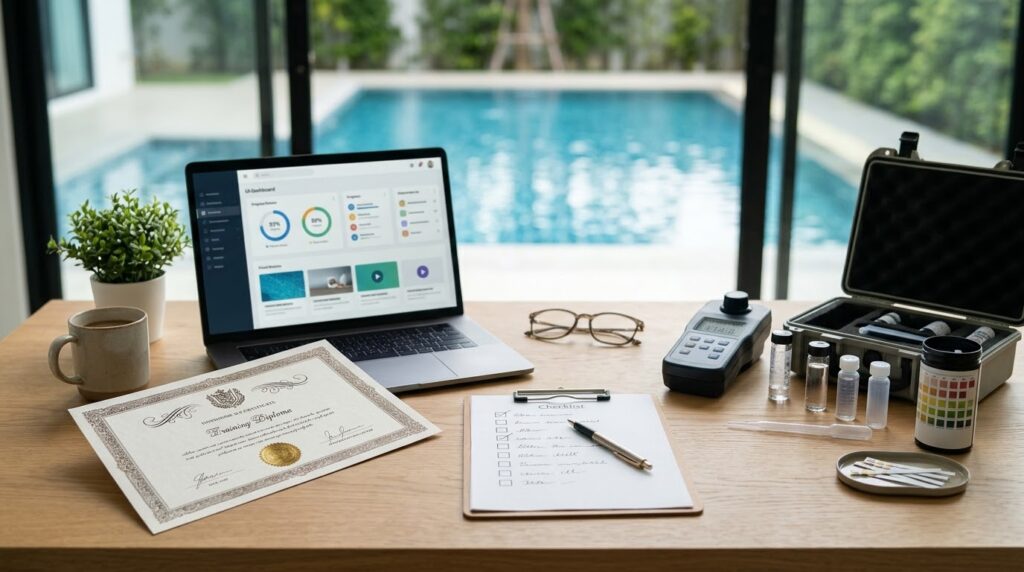
STA Level 2 Award in Swimming Pool Water Testing
The STA Level 2 Award in Swimming Pool Water Testing is a relevant option for people who need to test swimming pool or spa water as part of their job.
The course covers:
● Basic principles of pool water testing.
● Taking suitable water samples.
● Using a comparator and photometer.
● Measuring free chlorine, combined chlorine and pH.
● Understanding and interpreting test results.
● Recording water-testing results.
The current STA qualification information lists a four-hour, face-to-face course. Assessment includes a multiple-choice theory test and practical demonstrations. The qualification has a five-year validity period. Learners must be at least 16 years old. Check the latest requirements with the training provider before booking.
Read the STA Level 2 Award in Swimming Pool Water Testing for full details.
STA Level 2 Award in Swimming Pool Water Treatment
This qualification covers more than testing alone. It introduces the basic principles of pool water treatment and the knowledge needed to help maintain suitable bathing conditions.
Topics include:
● Swimming pool water testing.
● Basic water treatment principles.
● Water quality and chemical balance.
● Pool plant operations and maintenance.
● Practical water-testing skills.
The course is listed as an eight-hour, face-to-face qualification with theory and practical assessment. It may suit people who carry out routine testing and basic pool treatment tasks.
See the STA Level 2 Award in Pool Water Treatment for current details.
STA Level 3 Award in Pool Plant Operations
A pool plant qualification covers wider technical duties. It may be suitable for people responsible for managing and maintaining swimming pools, spas and related facilities.
Training can cover:
● Pool water chemistry.
● Filtration and circulation.
● Disinfection systems.
● Pool heating and ventilation.
● Energy efficiency.
● Pool plant management.
This is different from a basic pool water testing course. It focuses on the wider systems that help a swimming pool operate properly.
You can compare the available options through STA Pool Plant Qualifications.
Online Pool Maintenance Training
An online course can help learners build basic knowledge before moving on to more specialised training.
Online swimming pool maintenance courses may cover cleaning, equipment, water quality, chemical balance and pool safety. They can be useful for people who want flexible learning around work or other commitments.
However, an online course may not include practical testing with real equipment. If your job requires you to test pool water independently, check whether your employer expects a practical qualification.
You can also read our related guide, Online pool maintenance course: Practical Guide, to understand what online learning can offer.
Compare Different Pool Training Options
| Training option | Main learning focus | Suitable for |
|---|---|---|
| Online pool maintenance course | General pool care and water-quality knowledge | Beginners and people developing basic knowledge |
| STA Level 2 Water Testing | Sampling, testing and interpreting readings | Staff responsible for water testing |
| STA Level 2 Water Treatment | Testing and basic water treatment | Staff with wider pool-care duties |
| STA Level 3 Pool Plant Operations | Managing pool systems and plant equipment | People with wider operational responsibilities |
When comparing pool service courses, check the course content, assessment and qualification status. Not every course provides the same level of practical training.
Build your pool maintenance knowledge
Study the basics at your own pace. Check the course details and certificate terms before you enrol.
Explore the courseWho Should Take a Pool Water Testing Course?
A pool water testing course may be useful for people who work in swimming pool facilities or have responsibility for routine water checks.
It may suit:
Pool operators: People who check water quality and complete daily records.
Lifeguards: Staff who may have water-testing duties as part of their role.
Leisure centre staff: People who help manage swimming facilities.
Hotel and holiday park staff: Workers responsible for pool checks and basic maintenance.
Pool maintenance workers: People who want to improve their knowledge of water quality.
New learners: People exploring pool maintenance as a possible area of work.
The right training depends on your responsibilities. Someone who records routine readings may need different training from someone who manages the swimming pool plant room.
If you are comparing pool operator courses, check whether they cover water testing, water treatment or wider plant operations. These are related areas, but they are not the same qualification.
How to Choose the Right Pool Water Testing Course
Before booking a pool water testing course, think about what you need to learn and how you will use those skills at work.
Use this checklist to compare providers.
1. Check the Course Content
Look for clear information about the topics covered. A suitable course may include sample collection, test equipment, water readings and record-keeping.
If you need to use a photometer or liquid reagent kit at work, check whether the course teaches these methods.
2. Check the Practical Assessment
Some pool maintenance classes include practical demonstrations, while online courses may focus on theory.
If your role involves daily testing, practical experience can be important. Ask the provider what equipment you will use and how your skills will be assessed.
3. Check the Qualification
Read the course details before paying. Check:
● Who awards the qualification.
● Whether it is regulated or accredited.
● What assessment is required.
● Whether the certificate has an expiry date.
● Whether further training or renewal is needed.
A pool maintenance certificate can describe different types of learning. Do not assume that every certificate is equal to an STA water-testing qualification.
4. Compare the Full Course Cost
Check whether the advertised price includes registration, learning materials, assessment and certification.
A short online course and a practical qualification may have different fees because they offer different types of learning.
5. Choose a Suitable Study Format
Consider whether you need online, classroom or blended learning.
Online: Useful for flexible study and building basic knowledge.
Classroom: Gives you access to a tutor and structured learning.
Practical: Helps you use testing equipment and demonstrate skills.
Blended: Combines online learning with classroom or practical sessions.
If you are considering a pool maintenance course online, check whether it meets your learning needs and your employer’s requirements.
For a wider overview of course options, read our future pillar article, Swimming Pool Maintenance Training: UK Course Guide.
Build Your Pool Maintenance Knowledge with Studyhub
If you want to improve your understanding of pool care and water quality, the Studyhub Pool Maintenance course is an online learning option to consider.
The course introduces important areas of pool maintenance, including equipment, cleaning, chemical balance, water quality and safety.
What Will You Learn?
The published course curriculum includes five main learning modules:
| Module | What it covers |
|---|---|
| Maintenance Equipment | Understand equipment used for pool upkeep |
| Cleaning and Maintenance | Learn about cleaning and routine maintenance |
| Chemical Balance of Water | Build knowledge of pool water chemical balance |
| Water Quality Maintenance | Understand ways to maintain water quality |
| Pool Safety | Learn about important pool safety measures |
The course also includes an assignment.
Is the Studyhub Pool Maintenance Course Right for You?
The course may suit people who want to build a foundation in pool maintenance and improve their understanding of water quality.
It may be useful if you:
Are new to pool maintenance.
Want to understand pool equipment and cleaning.
Need to improve your knowledge of chemical balance.
Want flexible online learning.
Plan to explore further training in pool maintenance.
The course is not the same as the STA Level 2 Award in Swimming Pool Water Testing. Its published curriculum covers general pool maintenance topics, so do not treat it as a replacement for practical water-testing training where your role requires that qualification.
At the time of checking, Studyhub listed the course duration as approximately 1 hour and 53 minutes. Check the course page for the latest price, course details and certificate options before enrolling.
Build your knowledge at your own pace. Explore the Pool Maintenance course to see whether its learning topics match your goals
Final Thoughts: Choose the Right Pool Water Testing Course
Accurate water testing is an important part of swimming pool operation. Staff need to understand how to collect samples, use testing equipment, read results and complete records correctly.
A suitable pool water testing course can help you develop these skills. However, different training options provide different levels of learning. Compare the course content, practical assessment and qualification before making your choice.
If you want to build your general knowledge of pool equipment, cleaning, chemical balance and water quality, explore the Studyhub Pool Maintenance course. It can provide a useful starting point before you consider further specialist training.
Frequently Asked Questions
What Is a Pool Water Testing Course?
A pool water testing course teaches learners how to collect water samples, use testing equipment, understand readings and record results. Some courses also include practical demonstrations and assessments.
Which Qualification Is Best for Pool Water Testing in the UK?
The STA Level 2 Award in Swimming Pool Water Testing is a relevant UK qualification for people who need to test pool or spa water as part of their job. Check the current course requirements and employer expectations before enrolling.
Can I Learn Pool Water Testing Online?
You can learn basic water-quality principles through online training. However, practical testing qualifications may require classroom learning and demonstrations using real equipment.
An online pool maintenance course can help build your knowledge, but it may not provide the practical skills needed for every workplace role.
What Equipment Is Used for Pool Water Testing?
Common equipment includes test strips, liquid reagent kits, comparators and photometers. Each method has its own instructions, so learners should follow the equipment manufacturer’s guidance.
What Is the Difference Between Pool Water Testing and Pool Plant Operations?
Pool water testing focuses on taking samples, measuring water parameters and recording results. Pool plant operations cover wider systems such as filtration, circulation, disinfection and heating.
Does a Pool Maintenance Certificate Qualify Me to Test Pool Water?
Not automatically. The value of a pool maintenance certificate depends on the course content, awarding organisation and assessment. If your job requires a recognised water-testing qualification, check the specific requirements with your employer.
How Often Should Pool Water Be Tested?
Testing frequency depends on the pool, its monitoring system and its operating procedures. Pool operators should follow current PWTAG guidance and the site’s documented testing schedule.
- All Courses
- IT & Software389
- Management287
- Teaching and Education250
- Business245
- Health and Fitness227
- Engineering & Technology180
- Health & Safety163
- Health and Social Care144
- Quality Licence Scheme139
- Healthcare137
- Accounting & Finance130
- Psychology112
- Employability112
- Lifestyle105
- Marketing75
- Office Productivity74
- Animal Care63
- Design and Photography55
- Design50
- Beauty & Makeup49
- Accounting & Bookkeeping34
- Web Development27
- Construction26
- Writing20
- Child Care17
- Digital Marketing13
- Environment10
- Bundle8
- Coaching6
- Agriculture5

Awarded By


0 responses on "Pool Water Testing Course: UK Training Guide"