


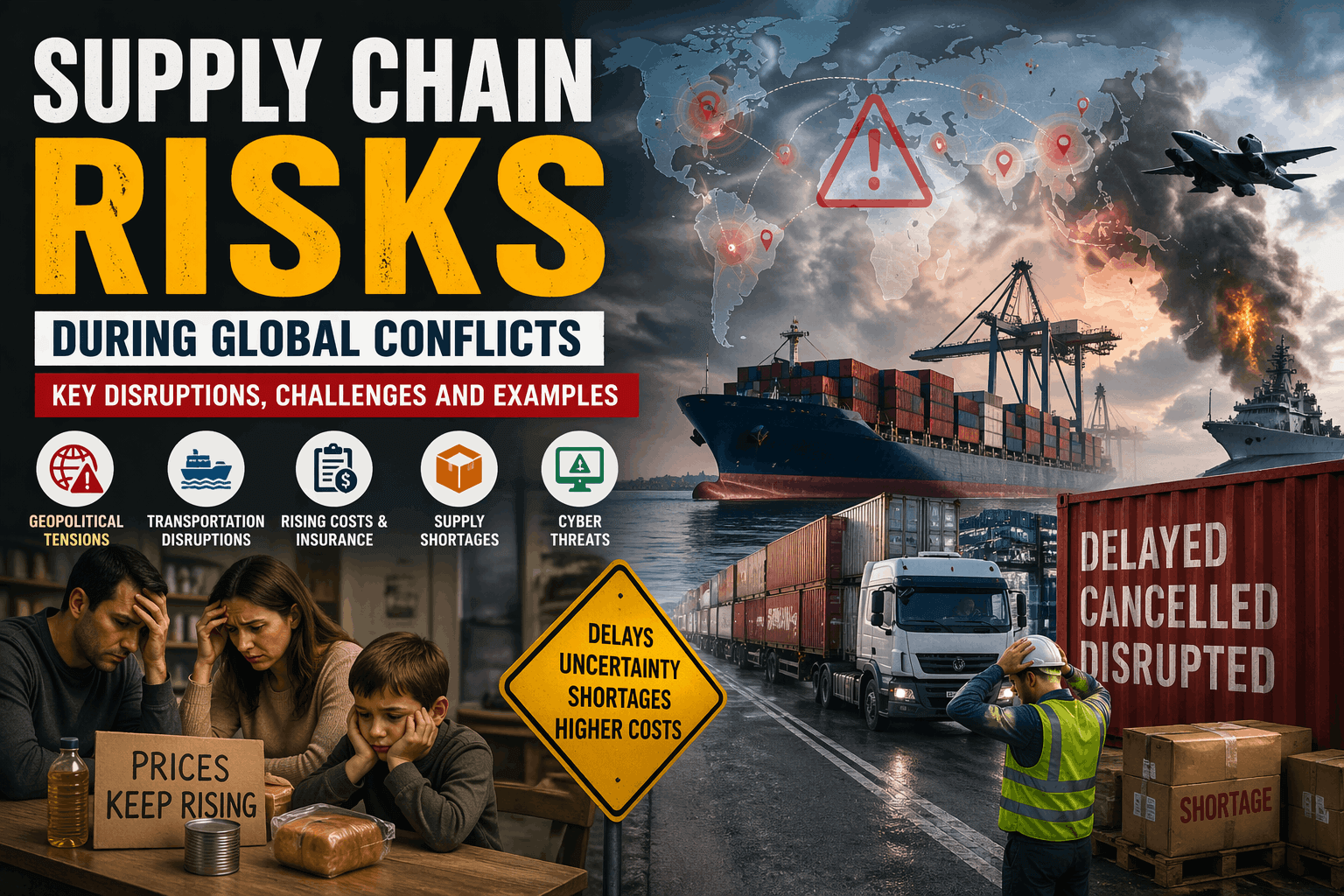
Why do everyday products suddenly become expensive or unavailable during global conflicts? Why do deliveries get delayed without warning? These are questions many people ask today. However, the answer is simple. It is all about supply chain risks.
In recent years, global conflicts have created constant disruption. In fact, supply chains are no longer stable systems. Instead, they face ongoing pressure from war, political tension, and trade restrictions. Therefore, businesses must understand how these risks work. In this guide, you will clearly learn what supply chain risks are, how global conflicts affect them, and how they can be managed effectively.
Table of Contents
Understanding the Supply Chain in Simple Terms
Before we explain supply chain risks, it is important to understand the supply chain itself.
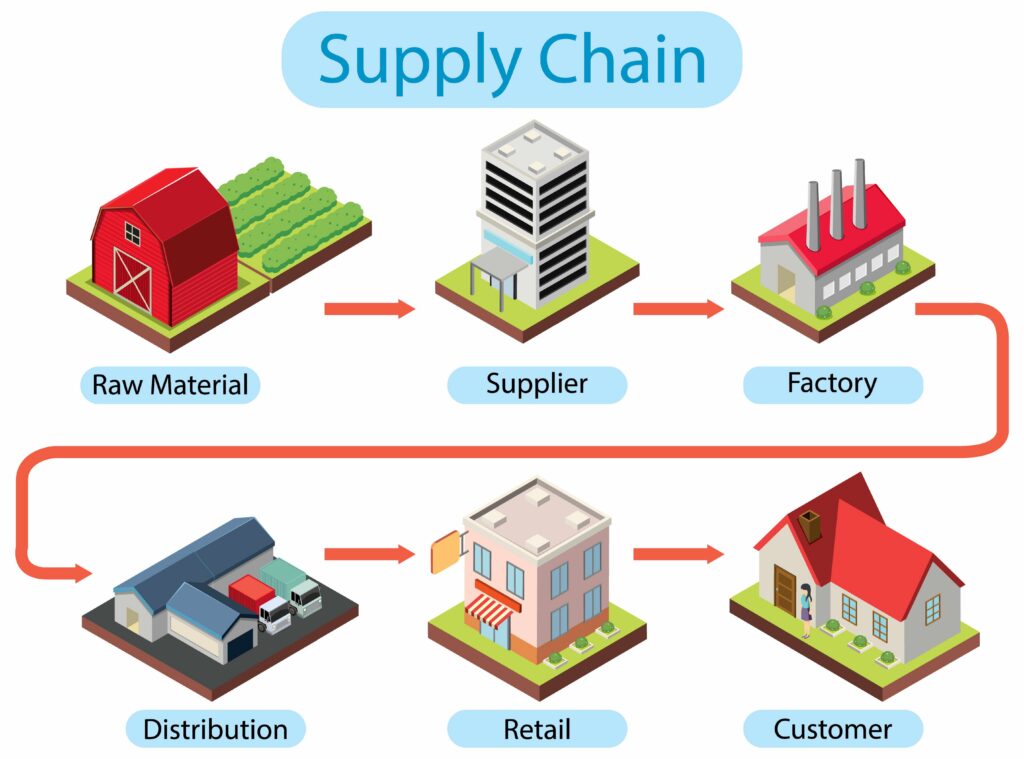
A supply chain is the journey of a product from start to finish. It begins with raw materials and ends with the final customer.
Simple Supply Chain Flow
Stage | Description |
Raw Materials | Basic resources are collected |
Manufacturing | Products are created |
Distribution | Goods are transported |
Retail | Products reach shops |
Customer | Final purchase happens |
Now, if any one step fails, the entire system is affected. Therefore, any disruption in this flow is called a supply chain risk.
Many beginners understand this concept through structured learning platforms like Studyhub. Their Supply Chain Management course explains each stage in a practical and simple way.
What Are Supply Chain Risks?
Now, let’s make it clear.
Supply chain risks are events that stop or slow down the movement of goods. These risks can happen suddenly. Moreover, during global conflicts, they become more severe.
Basic Examples of Supply Chain Risks
Factories stop working
Transport routes become unsafe
Costs increase suddenly
Governments restrict trade
As a result, businesses cannot deliver products on time. Therefore, managing supply chain risks becomes essential.
Why Global Conflicts Are Creating Permanent Disruption
In the past, supply chain problems were temporary. However, today the situation is very different. Global conflicts have created continuous disruption across industries.
According to data from UK Government and global economic reports, geopolitical tension is now one of the biggest threats to supply chains.
Key Reasons
Conflicts affect multiple countries at once
Trade policies change quickly
Transport routes become unsafe
Cyber threats are increasing
Because of these factors, supply chain risks are no longer short-term problems. Instead, they have become long-term challenges for businesses worldwide.
Key Disruptions Driving Supply Chain Risks
1. Maritime Route Disruptions
Certain global routes are extremely important. For example, the Strait of Hormuz and the Red Sea handle large volumes of trade.
However, conflicts in these areas block ships and force rerouting. As a result, deliveries take longer and costs increase.
Impact Overview
Issue | Effect |
Blocked routes | Delays in delivery |
Rerouting ships | Higher fuel costs |
Port congestion | Slow operations |
Therefore, maritime disruption is a major cause of supply chain risks.
2. Rising Insurance and Fuel Costs
Shipping becomes risky during conflicts. As a result, insurance premiums increase sharply.
In some cases, costs rise by nearly 1000 percent. At the same time, fuel prices also increase.
Therefore, businesses face higher expenses, which directly increases supply chain risks.
3. Raw Material Shortages and Export Bans
Many industries depend on specific materials. For example, neon gas is used in chip manufacturing, while steel is essential for construction.
However, conflicts often restrict access to these materials. As a result, production slows down.
Therefore, shortages become a major part of supply chain risks.
4. Trade Policy Changes
Governments respond quickly during conflicts. They introduce tariffs, sanctions, and restrictions.
Because of this, businesses face sudden cost changes. Therefore, trade policies create uncertainty and increase supply chain risks.
5. Cyber Attacks on Logistics Systems
Modern supply chains rely on digital systems. However, conflicts increase cyber threats.
For example, attacks on ports and shipping systems can stop operations completely.
Therefore, cybersecurity is now a critical part of supply chain risks.
Real-World Examples of Supply Chain Risks
Middle East Conflict (2026)
Around 20 percent of oil supply disrupted
Fuel prices increased globally
Medical supplies delayed
Therefore, this conflict increased global supply chain risks significantly.
Red Sea Disruptions (2023–2024)
Container traffic dropped by nearly 50 percent
Ships rerouted to longer paths
Ports became congested
As a result, delivery times increased worldwide.
Russia–Ukraine War
Wheat and food supply affected
Metal shortages increased
Prices rose globally
Therefore, this created long-term supply chain risks.
US–China Trade Tensions
Technology trade restrictions increased
Businesses moved production locations
As a result, supply chains became more complex.
Key Challenges in Managing Supply Chain Risks
1. Increased Lead Times
Ships now take longer routes. Therefore, delivery times increase by weeks.
As a result, businesses struggle to maintain inventory.
2. Reduced Visibility
Companies cannot fully track their supply chains. Therefore, problems appear without warning.
This lack of visibility increases supply chain risks.
3. Rising Costs
Transport, labour, and materials all become expensive. Therefore, businesses face financial pressure.
4. Supplier Diversification Issues
Switching suppliers during conflict is difficult. Sometimes quality decreases.
Therefore, managing suppliers becomes a major challenge in supply chain risks.
Professionals often improve these skills through Studyhub courses such as Lean Production, Logistics and Supply Chain Management Training.
How to Manage Supply Chain Risks Effectively
1. Diversification
Businesses should avoid depending on one supplier. Instead, they should work with multiple sources.
This reduces supply chain risks significantly.
2. Improved Visibility
Using digital tools helps track goods in real time. Therefore, businesses can respond quickly.
3. Nearshoring and Reshoring
Moving production closer to home improves control. Therefore, it reduces supply chain risks.
4. Data and Technology Use
Data analysis helps predict disruptions. Therefore, companies can act early.
5. Skill Development
Understanding supply chains is essential. Studyhub offers courses such as:
These courses help professionals manage supply chain risks confidently.
Visual Summary of Supply Chain Risks
Global Conflict
↓
Route Disruption → Cost Increase → Delay → Shortage
↓
SUPPLY CHAIN RISKS
↓
Business Loss + Customer Impact
Why Learning Supply Chain Management Matters
Today, supply chains are complex and unpredictable. Therefore, learning how to manage supply chain risks is a valuable skill.
Studyhub provides flexible and practical courses. As a result, learners gain real-world knowledge.
Moreover, these courses help individuals understand disruptions, plan strategies, and improve decision-making.
Conclusion
Global conflicts have transformed supply chains completely. As a result, disruptions are no longer temporary. Instead, they are ongoing challenges. Supply chain risks now affect every industry.
However, with proper understanding and planning, these risks can be managed. Therefore, businesses must focus on learning and adaptation.
By gaining knowledge through platforms like Studyhub, professionals can handle supply chain risks effectively and stay prepared for future challenges.
FAQs
Common supply chain risks in the UK include supplier failure, transport delays, rising costs, and demand fluctuations. Moreover, global conflicts and Brexit-related changes have increased disruptions across industries.
Compliance issues include meeting UK trade laws, import/export regulations, and ethical sourcing standards. In addition, businesses must follow rules set by bodies like HM Revenue & Customs and ensure supplier compliance.
The four pillars are planning, sourcing, making, and delivering. These stages ensure smooth operations, from forecasting demand to delivering products efficiently across the UK market.
- All Courses
- IT & Software388
- Management287
- Teaching and Education250
- Business245
- Health and Fitness227
- Engineering & Technology180
- Health & Safety163
- Health and Social Care143
- Quality Licence Scheme139
- Healthcare137
- Accounting & Finance130
- Psychology112
- Employability112
- Lifestyle105
- Marketing75
- Office Productivity74
- Animal Care63
- Design and Photography55
- Design50
- Beauty & Makeup49
- Accounting & Bookkeeping34
- Web Development27
- Construction26
- Writing20
- Child Care13
- Digital Marketing13
- Environment10
- Bundle8
- Coaching6
- Agriculture5

Awarded By


0 responses on "Supply Chain Risks During Global Conflicts: Key Disruptions, Challenges and Examples"