


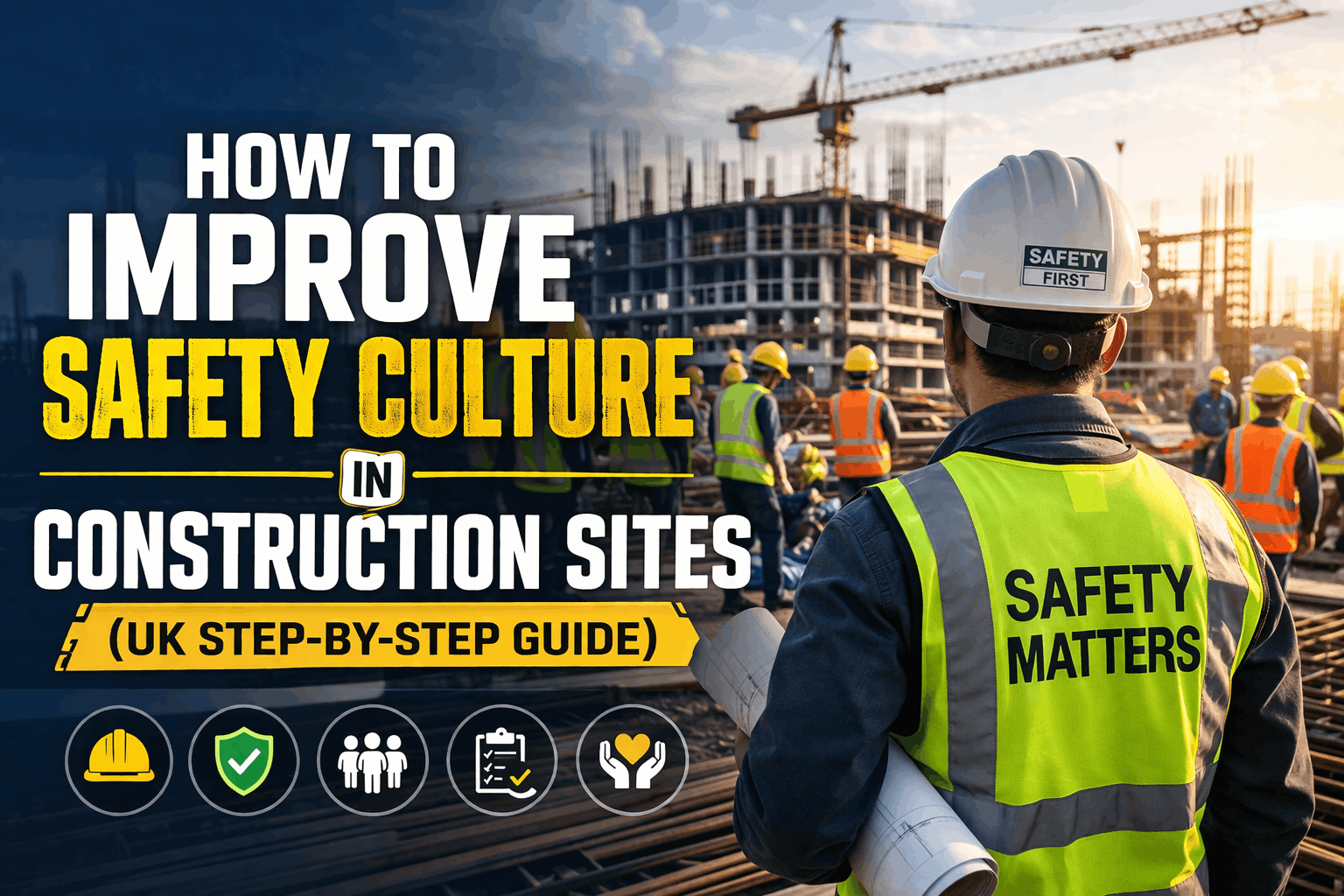
A worker on a busy UK construction site skips fastening his harness to save time. Nothing happens at that moment. However, later that day, a similar shortcut leads to a serious fall. Sadly, this is not rare. According to the Health and Safety Executive, construction accounts for a high number of workplace injuries each year. So, what really causes these incidents—lack of rules or unsafe habits? In most cases, the issue is deeper. It is the safety culture in construction. Therefore, improving safety culture is essential, not only to meet regulations but also to protect lives and ensure every worker returns home safely.
Table of Contents
What is Safety Culture in Construction?
Safety culture in construction means how people think and act about safety every day. It is not just about wearing helmets. Instead, it is about habits, decisions, and attitudes.
For example, a strong safety culture in construction means:
Workers follow rules even when no one is watching
Managers care about safety more than deadlines
Teams speak up when they see risks
However, if people ignore risks, the culture is weak. Therefore, safety becomes a real danger.
Why Safety Culture Matters More Than Rules
Many construction sites already follow strict safety rules. However, accidents still happen. So, what is missing? The answer lies in behaviour. While rules tell workers what to do, they do not always influence how people act under pressure. Therefore, without a strong safety culture in construction, rules alone cannot prevent risks.
According to the Health and Safety Executive, construction continues to be one of the most dangerous industries in the UK. You can review official statistics here: https://www.hse.gov.uk/statistics/
This clearly shows that improving safety culture in construction is essential. When safety becomes a shared value, results improve significantly.
Key benefits include:
Fewer injuries: Workers follow safe practices naturally, even without supervision
Better teamwork: Open communication builds trust across the site
Higher quality work: Fewer mistakes occur when risks are controlled early
Reduced delays: Projects run smoothly without unexpected incidents
Moreover, a strong safety culture in construction shifts safety from a rule-based system to a habit-driven mindset. As a result, safety becomes part of everyday actions, not just a checklist.
Step-by-Step Guide to Improve Safety Culture in Construction
Now, let’s understand how to actually improve safety culture in construction. Each step is simple, but together they create strong impact.
1. Start with Leadership Behaviour
Every worker watches their manager. Therefore, leadership sets the tone.
If a manager ignores safety rules, workers will follow. However, if leaders act responsibly, workers will copy that behaviour.
For example:
Wearing PPE at all times
Stopping unsafe work immediately
Talking openly about risks
Moreover, leadership training plays a big role. Many professionals improve these skills through platforms like Studyhub. Courses such as Site Management Safety Training Scheme (SMSTS) and Construction Site Management help managers understand real site responsibilities.
As a result, strong leadership builds strong safety culture in construction.
2. Provide Simple and Practical Training
Training should be easy to understand. If workers do not understand safety, they will not follow it.
Therefore, training must focus on:
Real site hazards
Equipment use
Emergency actions
For instance, workers can learn through Studyhub courses like Site Supervisor Safety Training Scheme (SSSTS), Site Supervisor Safety and Construction Safety Training Certificate. These courses explain safety in simple ways.
Moreover, regular training builds confidence. As a result, workers feel prepared, not confused.
3. Improve Communication on Site
Poor communication causes many accidents. Therefore, clear communication is essential.
Simple actions can help:
Daily safety talks
Clear warning signs
Open discussions
However, communication is not just speaking. It also means listening.
Workers should feel safe to report problems. As a result, risks are solved early.
Over time, this improves safety culture in construction naturally.
4. Encourage Worker Responsibility
Safety is not just a manager’s job. Everyone must take responsibility.
For example:
Workers should report hazards
Teams should support each other
Unsafe behaviour should be corrected
However, fear often stops people from speaking up. Therefore, companies must create a safe environment for reporting.
Courses like Health & Safety: Environmental Hazards in Construction from Studyhub help workers understand risks better.
As a result, workers become active participants in safety culture in construction.
5. Use Real-Life Examples to Teach Safety
People learn better from real situations. Therefore, sharing real examples is powerful.
Imagine a worker who ignored a loose cable. Later, someone tripped and got injured. This simple mistake could have been avoided.
However, when teams discuss such cases, awareness improves.
Moreover, training platforms like Studyhub include case-based learning in courses such as Site Management Basics: Ensuring Successful Project Execution and Construction Project Planning & Scheduling.
As a result, workers remember lessons and apply them daily.
6. Make Safety Part of Daily Routine
Safety should not feel like extra work. Instead, it should be part of daily tasks.
For example:
Checking equipment before use
Wearing PPE automatically
Following procedures without reminders
However, habits take time to build. Therefore, consistency is key.
Courses like From Blueprint to Reality: Building Construction Fundamentals from Studyhub help beginners understand these routines clearly.
As a result, safety culture in construction becomes natural.
7. Reward Safe Behaviour
People repeat what gets rewarded. Therefore, recognising safe behaviour is important.
For example:
Praise workers who follow safety rules
Give small rewards for safe actions
Highlight good examples in meetings
However, punishment alone does not work. Positive reinforcement builds better habits.
As a result, workers stay motivated to maintain safety culture in construction.
8. Use Technology to Support Safety
Technology can make safety easier. Therefore, modern tools should be used.
Examples include:
Digital safety checklists
Risk assessment tools
Monitoring systems
Moreover, learning tools like AI for Project Management & Scheduling in Construction on Studyhub help professionals understand modern safety methods.
As a result, safety becomes more efficient and reliable.
Simple Safety Culture Flow
Leadership
↓
Training
↓
Communication
↓
Behaviour
↓
Strong Safety Culture
Each step connects to the next. Therefore, missing one weakens the system.
Common Mistakes That Harm Safety Culture
Even well-managed construction sites make small mistakes. However, these small mistakes often grow into serious problems. So, what actually damages a strong safety culture in construction? In most cases, it is not one big failure but repeated small habits that go unnoticed.
For example, workers may ignore a loose cable or skip wearing gloves “just this once.” At the time, nothing happens. However, over time, these shortcuts create a risky environment. As a result, safety becomes weaker without anyone realising it.
Common mistakes to avoid:
Ignoring small risks: Minor hazards often lead to major accidents later
Rushing work: Deadlines push workers to take unsafe shortcuts
Poor training: Workers may not fully understand risks or procedures
Lack of supervision: Without guidance, unsafe habits quickly develop
Moreover, when these issues repeat daily, they slowly damage safety culture in construction. Therefore, early awareness is essential. By addressing small mistakes quickly, teams can prevent bigger incidents and build a safer, more responsible work environment.
How Training Supports Long-Term Safety
Training is not just learning—it is behaviour change.
For example, Studyhub offers courses like:
These courses build both knowledge and confidence.
Moreover, trained workers make better decisions. As a result, safety culture in construction improves over time.
Quick Safety Checklist
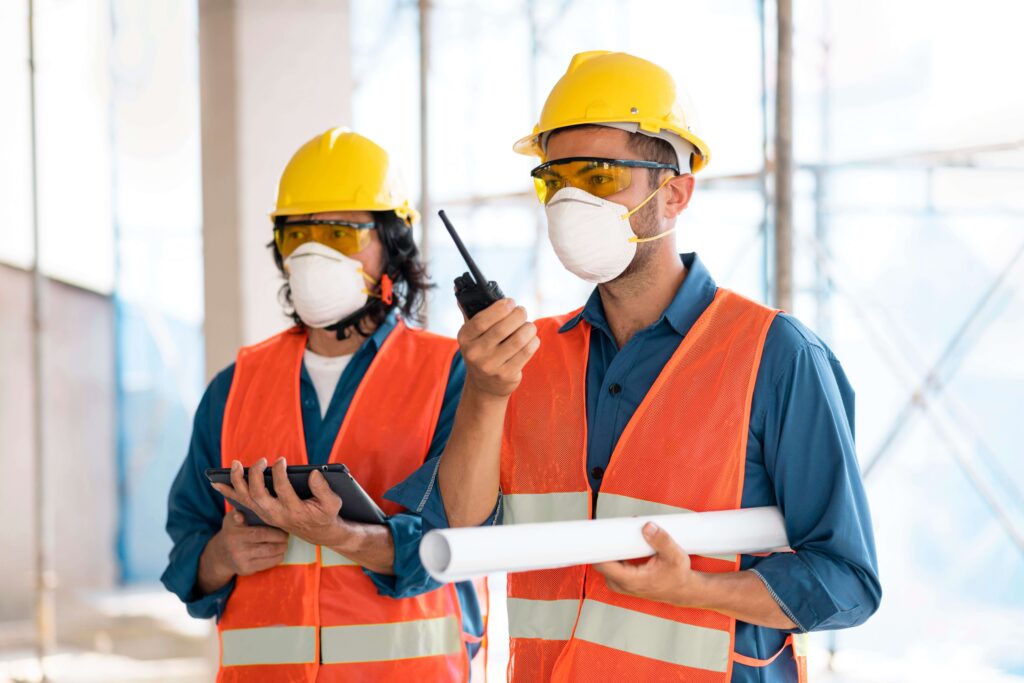
Before any construction work begins, one simple question should be asked: “Is this site truly safe right now?” Often, risks are not hidden—they are simply overlooked. Therefore, using a daily checklist is one of the easiest ways to strengthen safety culture in construction. While it may seem basic, these small checks can prevent serious accidents and save lives.
Key checks to follow every day:
PPE is worn correctly:
Workers may wear helmets or gloves, but are they using them properly? For example, an unfastened helmet or damaged gloves offer little protection. Therefore, checking PPE ensures real safety, not just compliance.
Tools and equipment are safe:
Before starting work, tools should be inspected carefully. A faulty machine or worn-out tool can cause sudden injuries. Moreover, regular checks help prevent unexpected breakdowns on-site.
Hazards are reported immediately:
Sometimes workers notice risks but choose to ignore them. However, even a small hazard can lead to a major incident. Therefore, reporting issues quickly is essential for improving safety culture in construction.
Workers are properly trained:
Without proper training, workers may unknowingly take risks. So, regular skill checks and refresher training help ensure everyone understands safe practices clearly.
Communication is clear and active:
Miscommunication often leads to confusion and accidents. Therefore, clear instructions and open discussions are necessary for safe operations.
In conclusion, these simple daily checks build strong habits over time. As a result, safety culture in construction becomes part of everyday work, not just a one-time effort.
Final Thoughts
So, can safety culture really change construction sites? Yes—but only with consistent effort. While rules are important, behaviour matters more. Therefore, improving safety culture in construction requires leadership, training, and teamwork.
Moreover, platforms like Studyhub help workers and managers gain the right skills. With the right mindset and proper training, safety becomes part of everyday work.
In the end, safety is not just a system—it is a shared responsibility. And when everyone plays their part, construction sites become safer for all.
FAQs
The 4 C’s are Competence, Commitment, Communication, and Control.
Together, they ensure workers are skilled, leaders prioritise safety, information flows clearly, and risks are properly managed on-site.
The 20-20-20 rule means taking a 20-second break every 20 minutes to look 20 feet away.
It helps reduce eye strain and improves focus, especially when using screens or detailed equipment on-site.
The four types are Reactive, Dependent, Independent, and Interdependent.
In the UK, the goal is interdependent culture, where everyone looks out for each other and takes shared responsibility.
Improve safety culture in construction by strong leadership, regular training, clear communication, and worker involvement.
Moreover, consistent monitoring and reporting systems help build safer habits over time.
Key tips include: wear PPE, follow procedures, report hazards, stay alert, use tools correctly, communicate clearly, and attend training.
These simple actions, when done daily, strengthen safety culture and prevent accidents.
- All Courses
- IT & Software388
- Management287
- Teaching and Education250
- Business245
- Health and Fitness227
- Engineering & Technology180
- Health & Safety163
- Health and Social Care143
- Quality Licence Scheme139
- Healthcare137
- Accounting & Finance130
- Psychology112
- Employability112
- Lifestyle105
- Marketing75
- Office Productivity74
- Animal Care63
- Design and Photography55
- Design50
- Beauty & Makeup49
- Accounting & Bookkeeping34
- Web Development27
- Construction26
- Writing20
- Child Care13
- Digital Marketing13
- Environment10
- Bundle8
- Coaching6
- Agriculture5

Awarded By


0 responses on "How to Improve Safety Culture in Construction Sites (UK Step-by-Step Guide)"