


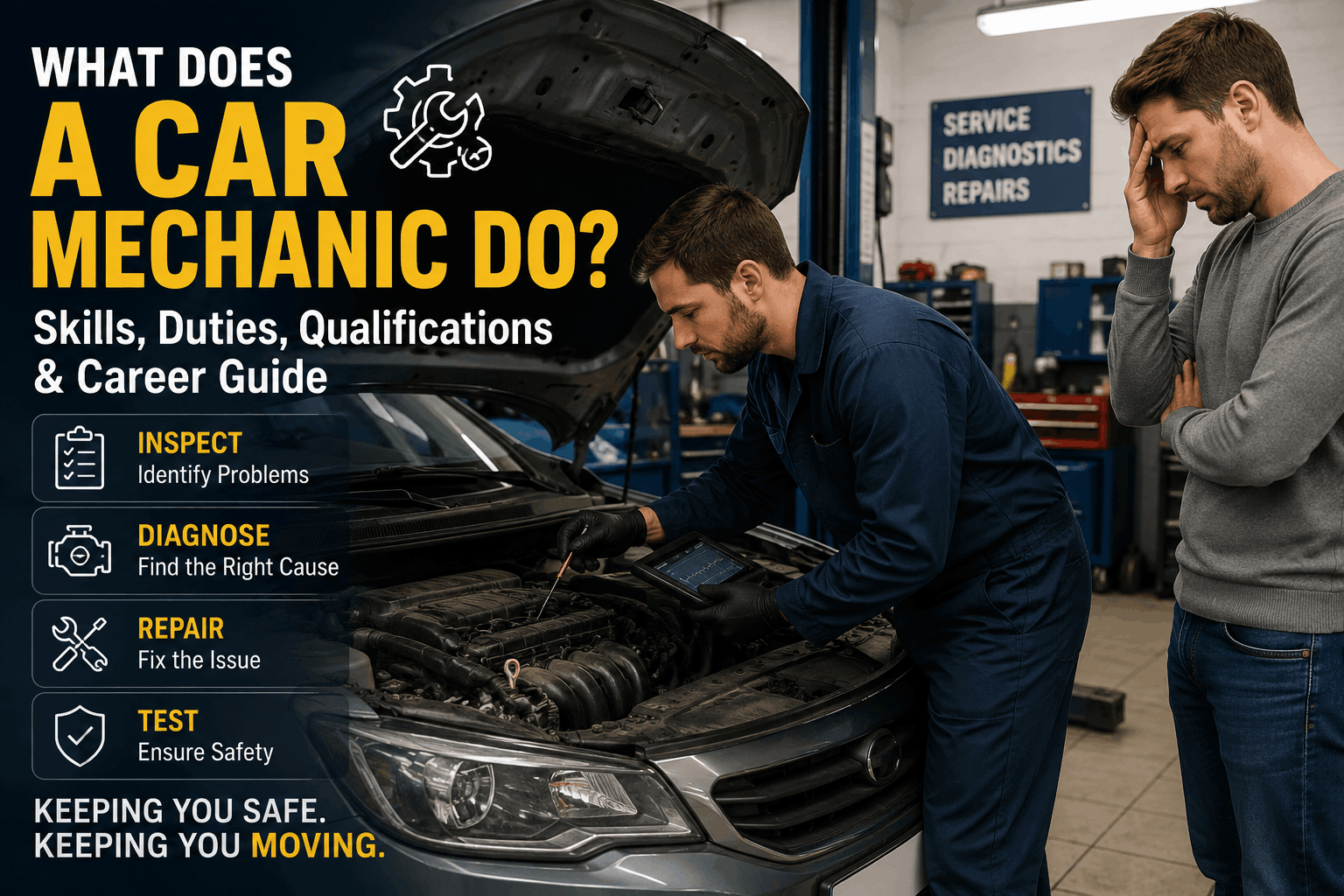
A family is ready to leave for a weekend trip when the engine warning light suddenly appears. The car begins making an unusual noise, and the journey has to stop before it even starts. Situations like this happen across the UK every day, and a skilled car mechanic is often the person who gets drivers safely back on the road. With experienced mechanics earning around £30,000 to £40,000+ a year, this career offers both stability and strong future demand. So, what does a car mechanic do? They inspect, diagnose, service and repair vehicles while working in garages, dealerships and specialist workshops. This guide explains everything you need to know, from daily duties and essential skills to qualifications, salary and career opportunities in the UK.
Table of Contents
What Is a Car Mechanic?
Before understanding what does a car mechanic do, it helps to know who a car mechanic is and why this role is so important. A car mechanic is a skilled professional who inspects, services, maintains and repairs vehicles to keep them safe and roadworthy. Today, mechanics do much more than fix broken engines. They use advanced diagnostic tools to find hidden faults, carry out regular maintenance and ensure every vehicle performs safely and efficiently. As modern cars become more advanced, skilled mechanics continue to play an essential role in keeping people and businesses moving across the UK.
What does a car mechanic do every day?
A typical working day may include:
Inspecting vehicles to identify faults or safety issues.
Diagnosing mechanical and electrical problems using specialist tools.
Carrying out routine servicing, including oil and filter changes.
Repairing or replacing damaged parts such as brakes, clutches and suspension.
Road testing vehicles after repairs to ensure they are safe.
Explaining repair work and maintenance advice to customers.
Keeping accurate service records and following workshop safety procedures.
Where do car mechanics work?
Car mechanics can build their careers in different workplaces, including:
Independent garages
Main vehicle dealerships
MOT testing centres
Fleet maintenance companies
Breakdown and roadside assistance services
Self-employed workshops
Whether they are carrying out a simple service or diagnosing a complex electrical fault, mechanics help prevent costly breakdowns and keep vehicles safe every day. If you want to start building these practical skills, Studyhub’s Car Mechanic Training – CPD Accredited and Car Mechanic & Repair Diploma Level 3 provide an excellent foundation before gaining real workshop experience.
What Does a Car Mechanic Do Every Day?
No two working days are exactly the same. One customer may arrive for a routine service, while another needs urgent repairs after a warning light appears. This variety is one of the reasons many mechanics enjoy their work.
Although every garage is different, most mechanics complete similar tasks throughout the day.
1. Inspecting Vehicles
Every repair starts with a careful inspection. Mechanics look for visible damage, worn components and signs of mechanical failure. They also ask customers questions because even small details can help identify a fault.
For example, a vibration that only appears at motorway speeds may point towards wheel balancing, suspension or tyre problems. Therefore, listening carefully is just as important as using tools.
2. Diagnosing Faults
Modern vehicles contain electronic control units that monitor almost every important system. When something goes wrong, warning lights often appear on the dashboard.
Instead of guessing, mechanics connect diagnostic equipment to the vehicle and read fault codes. However, fault codes only provide clues. Experienced mechanics carry out further tests before deciding what needs repairing.
This combination of technology and practical thinking makes diagnosis one of the most important parts of the job.
3. Carrying Out Routine Servicing
Not every vehicle arrives because something is broken. Many customers simply want regular servicing to keep their car in good condition.
Routine servicing usually includes:
Changing engine oil.
Replacing oil and air filters.
Checking coolant levels.
Inspecting brakes.
Testing the battery.
Checking tyres.
Looking for worn components.
These simple jobs help prevent expensive repairs later and improve vehicle reliability.
Studyhub also covers preventive maintenance throughout its Car Mechanic Training: Detailing, Maintenance & Restoration, helping learners understand that maintaining a vehicle is often just as important as repairing one.
4. Repairing Mechanical Problems
Once the fault has been identified, the mechanic repairs or replaces damaged components. Every repair is different. Some take less than an hour, while others require several days of careful work.
Common repairs include:
Brake replacement.
Clutch repairs.
Suspension repairs.
Engine repairs.
Timing belt replacement.
Battery replacement.
Exhaust repairs.
After completing every repair, mechanics inspect their work carefully before returning the vehicle to the customer.
What Problems Does a Car Mechanic Solve?
Understanding what does a car mechanic do becomes much easier when you look at the problems they solve every day. Every vehicle that enters a garage has a story. Sometimes the problem is obvious. However, in many cases, the fault is hidden and requires careful investigation.
A skilled mechanic does not replace parts without checking the vehicle first. Instead, they inspect the symptoms, carry out tests and identify the real cause. This saves customers money and prevents unnecessary repairs.
The table below shows some of the most common problems mechanics deal with.
Common Problem | Signs the Driver Notices | How a Car Mechanic Solves It |
Engine warning light | Dashboard warning light, loss of power | Uses diagnostic equipment, checks sensors and repairs the fault |
Brake problems | Grinding noise, weak braking, vibration | Inspects brake pads, discs and hydraulic system before replacing worn parts |
Battery or electrical fault | Car won’t start, dim lights | Tests the battery, alternator and wiring to find the real issue |
Suspension problems | Bumpy ride, uneven tyre wear | Checks shocks, springs and suspension components |
Steering problems | Vehicle pulls to one side | Inspects steering system and wheel alignment |
Cooling system fault | Engine overheating | Checks radiator, coolant, hoses and water pump |
Although these are common repairs, every vehicle is different. Therefore, mechanics need experience, patience and logical thinking to find the correct solution.
Skills Every Car Mechanic Needs
Now that you understand what does a car mechanic do, the next question is simple: what skills make someone successful in this career?
Modern garages are looking for people who can work with both traditional mechanical systems and modern vehicle technology. Fortunately, these skills can all be developed through learning and practical experience.
Technical Knowledge
Every mechanic needs a strong understanding of how vehicles work. Engines, brakes, steering, suspension and electrical systems all work together. Therefore, understanding one system helps you understand the next.
Without this knowledge, diagnosing faults becomes much more difficult.
Studyhub’s Car Mechanic & Repair Diploma Level 3 introduces these systems step by step, making complex topics easier to understand before learners gain practical experience.
Diagnostic Skills
Modern vehicles rely on computers as much as mechanical parts. Consequently, mechanics must know how to use diagnostic equipment correctly.
Imagine two cars showing exactly the same warning light. One may have a faulty sensor, while the other has damaged wiring. Although the warning looks identical, the repair is completely different.
Good diagnostic skills help mechanics:
Find faults quickly.
Reduce repair time.
Avoid replacing unnecessary parts.
Save customers money.
This is one of the fastest-growing skills in today’s automotive industry.
Problem-Solving Skills
Every repair is like solving a puzzle. Mechanics collect information, inspect the vehicle and test different systems before reaching a conclusion.
For example, poor fuel economy may be caused by worn spark plugs, blocked filters, low tyre pressure or faulty sensors. Instead of guessing, a mechanic follows a logical process until the real cause is found.
Because every day brings different challenges, problem-solving is one of the most rewarding parts of the job.
Attention to Detail
Small mistakes can create major problems.
A loose bolt, incorrectly fitted brake pad or forgotten electrical connection could affect vehicle safety. Therefore, professional mechanics inspect every repair carefully before returning a vehicle to its owner.
This attention to detail helps build trust and creates loyal customers.
Communication Skills
Many people forget that mechanics spend time talking to customers as well as repairing vehicles.
Drivers often know something feels wrong but cannot explain it using technical language. Therefore, mechanics must listen carefully and explain repairs in simple words.
Good communication helps customers understand:
What caused the problem.
Why repairs are needed.
How long repairs will take.
How to avoid similar problems in the future.
This skill is just as valuable as technical knowledge.
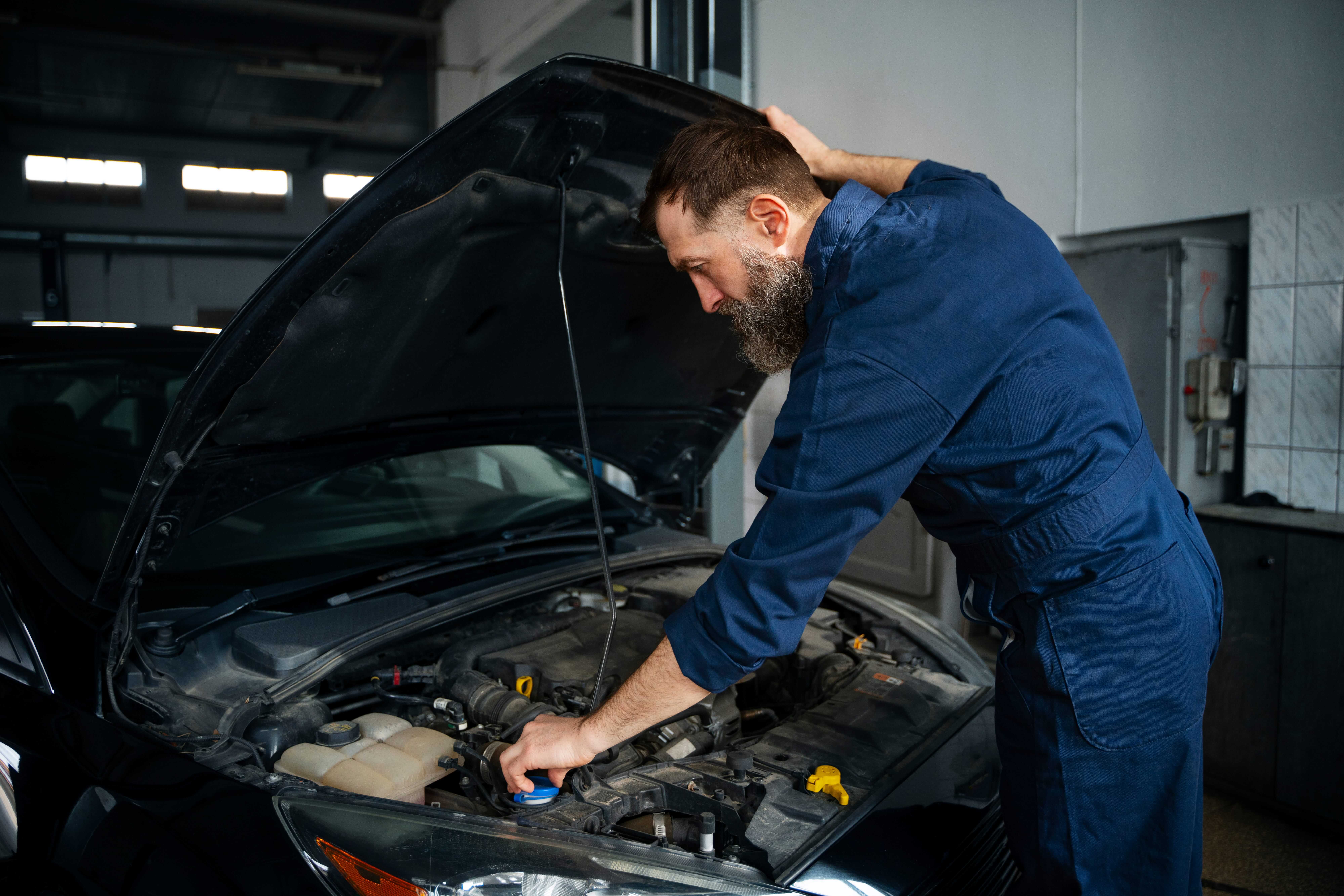
Qualifications Needed to Become a Car Mechanic
Many people ask what does a car mechanic do, and then immediately wonder how they can start this career themselves.
Fortunately, there are several routes into the profession. You do not have to follow exactly the same path as everyone else. Instead, choose the option that suits your situation and learning style.
Apprenticeships
Many school leavers choose an apprenticeship because it combines learning with paid work. You gain practical experience while developing the skills employers expect.
College Courses
Colleges offer automotive programmes that teach vehicle maintenance, diagnostics and repair techniques before learners move into employment.
Online Learning
Flexible online learning is becoming increasingly popular, especially for adults changing careers.
Studyhub supports learners through courses including:
These courses help learners understand vehicle systems, maintenance and workshop procedures before gaining hands-on experience.
Regardless of which route you choose, practical experience remains essential. The more vehicles you work on, the more confident you become.
Car Mechanic Salary in the UK
After learning what does a car mechanic do, many people naturally want to know how much they could earn. Salary depends on your experience, qualifications, location and employer. In general, your earning potential increases as you gain practical experience, develop specialist skills and take on more responsibility. Mechanics who specialise in hybrid vehicles, electric vehicles (EVs) or advanced diagnostics can often earn higher salaries.
Experience Level | Typical UK Salary* |
Apprentice | £15,000–£22,000 |
Newly Qualified Car Mechanic | £25,000–£30,000 |
Experienced Car Mechanic | £30,000–£40,000 |
Senior Technician | £40,000–£50,000+ |
Workshop Manager | £45,000–£60,000+ |
*These salary ranges are based on UK career guidance and industry averages. Actual earnings may vary depending on your employer, experience and location. You can check the latest salary information on the official National Careers Service Motor Mechanic.
As electric and hybrid vehicles become more common, specialists with advanced diagnostic skills are expected to remain in strong demand.
Career Progression
A career as a mechanic does not stop after your first job. Instead, it opens the door to many exciting opportunities.
With experience, you could become:
Vehicle Technician
Diagnostic Technician
MOT Tester
Hybrid or EV Specialist
Workshop Supervisor
Workshop Manager
Fleet Maintenance Engineer
Self-employed Garage Owner
Every new qualification and every year of experience increases your knowledge and career prospects.
Studyhub’s Automotive Electrical Diagnosis for Beginners course support this journey by helping learners continue developing their skills throughout their careers.
Access the course library of 3000+ courses for just £149 for a lifetime!

Final Thoughts
The answer to what does a car mechanic do is much bigger than repairing broken vehicles. Modern mechanics diagnose faults, maintain complex systems, solve technical problems and help keep people safe every day. As vehicle technology continues to evolve, the demand for skilled mechanics across the UK is expected to remain strong. If you enjoy practical work, solving problems and learning new skills, becoming a car mechanic could be an excellent career choice. Start by building your knowledge, gain practical experience and continue learning as the industry develops.
FAQs
Many employers value apprenticeships, college qualifications or recognised automotive training combined with practical experience.
Yes. It offers steady demand, opportunities to specialise and clear career progression, especially as hybrid and electric vehicles become more common.
Yes. Many people begin with training and then gain practical experience through apprenticeships or entry-level workshop roles.
A car mechanic mainly focuses on servicing and repairs, while a vehicle technician often works with advanced diagnostics, electronics and manufacturer-specific systems.
- All Courses
- IT & Software388
- Management287
- Teaching and Education250
- Business245
- Health and Fitness227
- Engineering & Technology180
- Health & Safety163
- Health and Social Care143
- Quality Licence Scheme139
- Healthcare137
- Accounting & Finance130
- Psychology112
- Employability112
- Lifestyle105
- Marketing75
- Office Productivity74
- Animal Care63
- Design and Photography55
- Design50
- Beauty & Makeup49
- Accounting & Bookkeeping34
- Web Development27
- Construction26
- Writing20
- Child Care13
- Digital Marketing13
- Environment10
- Bundle8
- Coaching6
- Agriculture5

Awarded By


0 responses on "What Does a Car Mechanic Do? Skills, Duties, Qualifications & Career Guide"