


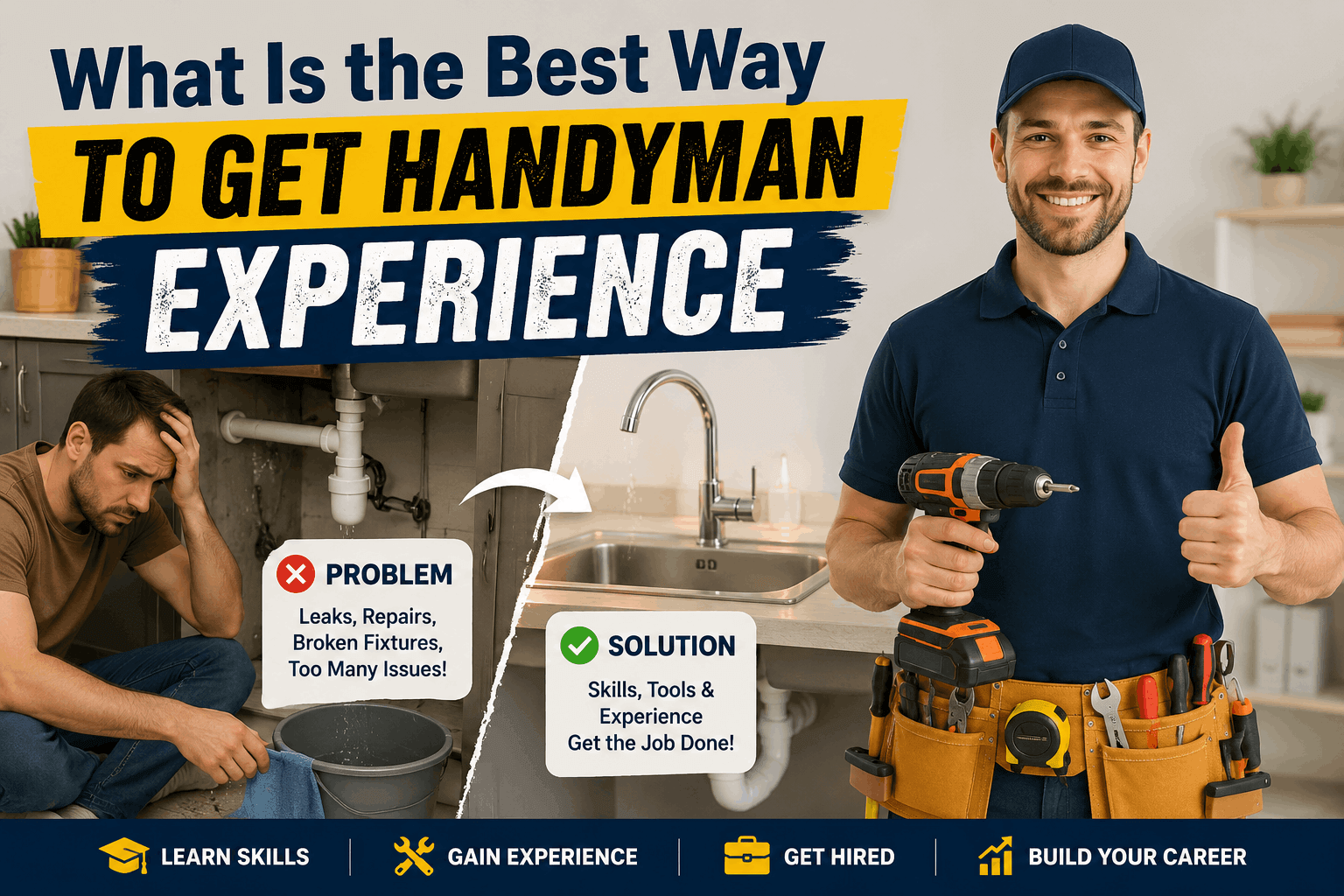
Every day across the UK, someone needs a door repaired, a fence fixed, or a room painted. While these may seem like small jobs, they create thousands of opportunities for skilled handymen. However, many people never take the first step because they believe they need years of experience before anyone will hire them. That simply is not true. The best way to build handyman experience is to start small, learn the right skills, and gain practical knowledge one project at a time.
Table of Contents
What Is a Handyman?
A handyman is someone who carries out different repair and maintenance jobs around homes, offices, schools, hotels, and other buildings. Unlike electricians or plumbers who specialise in one trade, a handyman completes a variety of everyday tasks.
A handyman may:
Paint walls and ceilings
Repair doors and fences
Fix leaking taps
Install shelves and curtain rails
Assemble furniture
Carry out basic carpentry
Complete general property maintenance
Because every day is different, this career is ideal for people who enjoy solving problems and learning new skills.
If you are completely new to maintenance work, many beginners start by learning the basics through the Studyhub Caretaker / Handyman Certification Course Online before practising those skills on real projects. This combination helps build confidence while developing practical handyman experience.
Why Is Handyman Experience Important?
Watching a repair video is easy. Completing the repair correctly is something else. That is why handyman experience is so valuable.
Every completed project teaches something new. Sometimes you learn how to use a different tool. Other times you discover a quicker way to solve a problem. Most importantly, you become more confident.
Good handyman experience helps you:
Complete repairs safely
Improve your practical skills
Build customer trust
Work more efficiently
Prepare for better-paying jobs
Therefore, practical experience should always go hand in hand with learning.
Studyhub encourages learners to combine training with real projects instead of relying on theory alone. This approach helps beginners understand maintenance work before applying those skills in everyday situations.
What Is the Best Way to Get Handyman Experience?
There is no single shortcut to gaining handyman experience. Instead, successful handymen usually follow several practical steps. Each step builds confidence and prepares you for the next stage.
1. Start With Small Projects at Home
Your own home is often the best place to begin. Simple repairs allow you to practise without the pressure of working for paying customers.
Start with jobs like:
Hanging shelves
Painting a room
Building flat-pack furniture
Replacing door handles
Fixing fences
Installing curtain rails
These projects improve measuring, drilling, fixing, and problem-solving skills. Although they seem simple, they create valuable handyman experience that will help you later.
Home Project | Skill You Learn |
Painting | Surface preparation |
Shelves | Measuring and levelling |
Furniture assembly | Tool handling |
Fence repairs | Basic carpentry |
Door handles | Hardware fitting |
Many Studyhub learners complete these types of projects while studying the Caretaker / Handyman Certification Course Online, allowing them to practise what they learn immediately.
2. Work in Property Maintenance
If there is one route that stands out, it is property maintenance. Many experienced handymen recommend this because it exposes you to different repair jobs every week.
You might repair doors one day, paint walls the next, and fix minor plumbing issues later in the week.
Common employers include:
Schools
Hotels
Care homes
Housing associations
Apartment buildings
Office facilities
Because every day is different, property maintenance helps you build handyman experience much faster than repeating the same task every day.
Studyhub’s maintenance-focused training also supports learners who want to prepare for these types of roles by introducing essential maintenance knowledge before entering the workplace.
3. Learn From Experienced Handymen
Working alongside an experienced handyman is another excellent way to gain handyman experience.
You do not just learn repairs.
You also learn how professionals:
Speak to customers
Plan jobs
Choose materials
Use tools safely
Solve unexpected problems
Even helping someone part-time can improve your skills much faster than learning alone.
4. Volunteer for Community Projects
Volunteering is one of the easiest ways to gain practical handyman experience while helping others.
Many organisations need volunteers for:
Painting
Fence repairs
Garden maintenance
Furniture assembly
Building maintenance
Besides improving your skills, volunteering helps you build a portfolio of completed work.
That portfolio can later support job applications and future customers.
5. Build a Portfolio
Do not wait until you become self-employed.
Instead, document every project from the beginning.
Also record:
What you repaired
Which tools you used
What you learned
Over time, this portfolio becomes proof of your growing handyman experience.
6. Start With Small Paid Jobs
Once you feel confident, begin accepting simple paid work.
Good beginner jobs include:
Painting
Shelf installation
Furniture assembly
Fence repairs
Minor maintenance work
Many successful handymen found their first customers through:
Family
Friends
Neighbours
Local Facebook groups
Community recommendations
Focus on doing excellent work rather than taking difficult jobs too early.

Skills Every Handyman Should Learn
Building handyman experience is not only about knowing how to repair things. A successful handyman also needs practical knowledge, problem-solving ability, and good communication skills. Every repair job is different, so developing the right mix of technical and professional skills will help you complete work safely, satisfy customers, and grow your career. Instead of trying to learn everything at once, focus on the core skills below.
Practical Repair and Maintenance Skills
Every handyman should understand basic painting, carpentry, furniture assembly, fence repairs, and minor plumbing work. These are the jobs customers request most often. By learning these skills first, you can confidently complete everyday maintenance tasks while continuing to build valuable handyman experience. Many beginners strengthen these fundamentals through the Studyhub Caretaker / Handyman Certification Course Online before applying them to real projects.
Tool Handling and Health & Safety Awareness
Knowing how to use tools correctly is just as important as knowing how to repair something. A handyman regularly works with drills, saws, ladders, and other equipment, so using them safely helps prevent accidents and damage. Understanding basic health and safety also protects you, your customers, and the property you are working on. Employers and clients are far more likely to trust someone who works carefully and professionally.
No two repair jobs are exactly the same. Sometimes you may discover hidden damage or an unexpected issue once work begins. Therefore, a good handyman needs to think logically and find practical solutions without rushing. Paying attention to small details also improves the quality of your work, reduces mistakes, and helps build a strong reputation with customers.
Technical skills alone are not enough. A handyman spends time talking to homeowners, landlords, businesses, and property managers. Listening carefully, explaining repairs in simple language, arriving on time, and treating customers respectfully all help build trust. Happy customers are more likely to recommend your services, which often leads to repeat work and more opportunities.
Time Management and Business Awareness
As your handyman experience grows, you will often manage several jobs in a single day. Planning your schedule, estimating how long repairs will take, and organising materials help you work more efficiently. If you hope to become self-employed, understanding pricing, customer management, and marketing is equally important. The Studyhub Handyman: Starting Own Business for Handyperson Training Level 3 course introduces these business skills and prepares learners to run a successful handyman business in the future.
Developing these skills will make you a more confident and reliable handyman. More importantly, they work together. Practical ability helps you complete repairs, while communication, safety, and organisation help you build a successful career. Continue improving these skills as you gain more handyman experience, and you will be well prepared for maintenance roles, higher-paying jobs, or even running your own handyman business.
How Much Can a Handyman Earn in the UK?
Your earnings as a handyman will depend on several factors, including your location, the services you offer, your reputation, and the amount of handyman experience you have gained. In general, beginners start with lower salaries, while experienced handymen or those running their own businesses can earn significantly more.
According to the National Careers Service, maintenance and property-related careers typically offer higher salaries as skills and experience increase. Career profiles for similar maintenance roles also show starter salaries from around £20,000–£24,000, rising to £35,000–£40,000+ with experience.
Experience Level | Typical Annual Salary (UK) |
Beginner | £20,000–£25,000 |
Intermediate | £25,000–£35,000 |
Experienced | £35,000–£50,000+ |
Self-employed Handyman | Varies depending on workload, location, and client base |
As your handyman experience grows, you may also charge higher rates or specialise in certain services.
What Jobs Can You Do After Gaining Handyman Experience?
Once you have developed enough handyman experience, several career opportunities become available.
You could work as a:
Property Maintenance Technician
School Caretaker
Hotel Maintenance Operative
Housing Maintenance Worker
Facilities Assistant
Building Maintenance Technician
Self-employed Handyman
Many people eventually decide to run their own business.
If that is your goal, the Studyhub Handyman: Starting Own Business for Handyperson Training Level 3 course explains how to price jobs, manage customers, promote your services, and grow a successful handyman business.
Many learners begin with the Caretaker / Handyman Certification Course Online before progressing to the business course as their handyman experience grows.
Access the course library of 3000+ courses for just £149 for a lifetime!

Final Thoughts
Building handyman experience is a journey, not a race. Start with simple repairs, improve your skills through regular practice, and look for opportunities in property maintenance or volunteer projects. As your confidence grows, take on small paid jobs and continue learning. Many successful handymen combine practical work with structured learning through Studyhub, allowing them to improve their skills while preparing for better career opportunities. Whether you want a maintenance job or plan to start your own business, gaining steady handyman experience today can open many doors tomorrow.
FAQs
Yes. Many people build handyman experience through home projects, volunteering, and maintenance work. Training simply helps you learn faster and work more confidently.
Property maintenance is one of the quickest routes because it exposes you to different repair jobs every week.
Yes. Volunteering provides practical handyman experience, improves confidence, and helps build a portfolio.
Most beginners develop useful handyman experience within six to twelve months if they practise regularly.
- All Courses
- IT & Software388
- Management287
- Teaching and Education250
- Business245
- Health and Fitness227
- Engineering & Technology180
- Health & Safety163
- Health and Social Care143
- Quality Licence Scheme139
- Healthcare137
- Accounting & Finance130
- Psychology112
- Employability112
- Lifestyle105
- Marketing75
- Office Productivity74
- Animal Care63
- Design and Photography55
- Design50
- Beauty & Makeup49
- Accounting & Bookkeeping34
- Web Development27
- Construction26
- Writing20
- Child Care13
- Digital Marketing13
- Environment10
- Bundle8
- Coaching6
- Agriculture5

Awarded By


0 responses on "What Is the Best Way to Get Handyman Experience?"